
Permanent Hair Dye vs Semi-Permanent: Which Is Right for You?
Hair Colour, At-Home Dyeing, Hair Care, Permanent Hair Dye, Semi-Permanent
Discover the key differences between permanent hair dye vs semi-permanent colour. Find out which of these hair dye types is right for your at-home makeover!
Welcome back to HairColourChart.online! If you are standing in the hair care aisle or browsing online, feeling completely overwhelmed by the sheer number of boxes staring back at you, you are not alone. Choosing between permanent hair dye vs semi-permanent colour is one of the biggest decisions you will make for your hair.
Whether you want to cover stubborn greys, experiment with a vibrant fashion shade, or simply add a glossy tint to your natural hue, understanding the different hair dye types is crucial for achieving salon-worthy results at home. Let us break down the science, the application, and the aftercare so you can colour with confidence.
Understanding Hair Dye Types: How Do They Work?
To make the right choice, you need to know what is actually happening beneath the surface of your hair cuticle.
Permanent Hair Dye
As the name suggests, Permanent hair dye alters your hair's natural pigment permanently. It uses a two-step chemical process involving ammonia (or an ammonia substitute) and a developer (hydrogen peroxide). The ammonia opens the hair cuticle, allowing the developer to lift your natural colour and deposit the new pigment deep into the hair cortex.
- Developer Volume: Usually 10, 20, 30, or 40 volume, depending on how much lift you need.
- Longevity: Lasts until it grows out or is cut off, though the tone may fade over time.
- Best for: 100% grey coverage, lightening your hair, or making dramatic, long-lasting colour changes.
Demi-Permanent
Often confused with semi-permanent, demi-permanent colour is the perfect middle ground. It uses a very low-volume developer (usually 5 to 15 volume) and is ammonia-free. It opens the cuticle just enough to deposit colour slightly below the surface but does not lift or lighten your natural shade.
- Longevity: According to What Is The Difference Between Semi vs. Demi Permanent Hair Color | Hairstory, demi-permanent colour can last up to 30 washes.
- Best for: Blending early greys, darkening your hair, refreshing faded ends, or adding a rich, glossy tone without a harsh regrowth line.
Semi-Permanent
Semi-permanent hair dye is a direct dye. It contains no ammonia and requires no developer. Instead of penetrating the hair shaft, it simply coats the outside of the cuticle like a stain.
- Longevity: Typically lasts around 5 to 15 washes, depending on your hair's porosity.
- Best for: Trying out vivid fashion colours (like pink or blue) on pre-lightened hair, adding a temporary tint, or boosting shine without any chemical damage.
Permanent vs Semi-Permanent: Which Should You Choose?
Still unsure? Here is a quick checklist to help you decide:
- Choose Permanent if: You want to go lighter than your current shade, you have more than 25% grey hair that you want completely covered, or you are committed to a specific colour long-term.
- Choose Semi-Permanent if: You want zero damage, you are experimenting with a fun colour for a festival or holiday, or you want to refresh a faded permanent colour between root touch-ups.
- Choose Demi-Permanent if: You want to go darker, you want to blend away a few greys, or you want a rich colour that fades gracefully without leaving a stark root line, as noted by Semi-Permanent vs Permanent vs Demi-Permanent Hair Color - Key Differences.
What You'll Need for At-Home Colouring
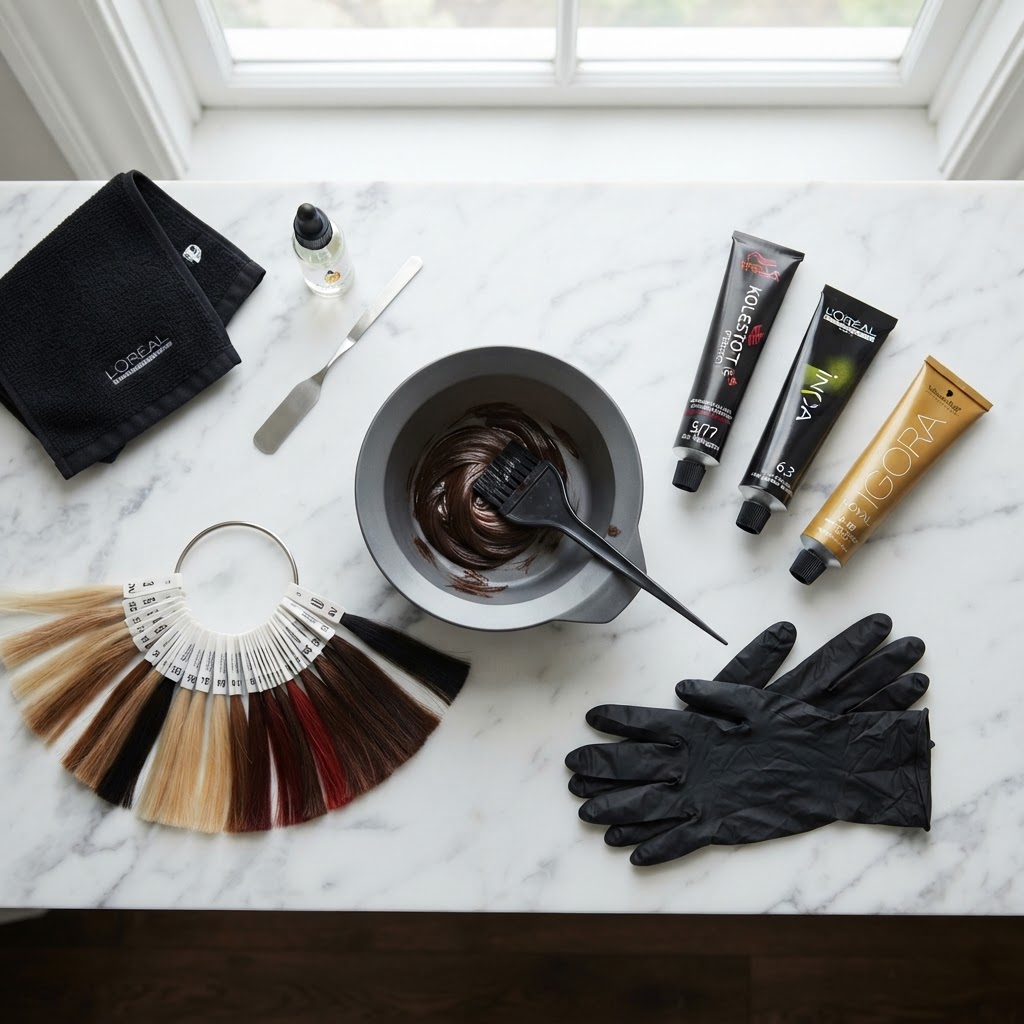
Preparation is the secret to a flawless at-home dye job. Gather these essentials before you begin:
- Your chosen hair dye (buy two boxes if your hair is past your shoulders).
- A non-metallic mixing bowl and a tint brush (for precise application).
- A pair of high-quality, reusable salon gloves.
- Barrier cream (petroleum jelly or a thick moisturiser) to protect your hairline and ears.
- Sectioning clips.
- An old t-shirt and a dark towel.
- A timer.
Step-by-Step: How to Apply Your Chosen Colour
- The Patch and Strand Test: Always perform an allergy patch test 48 hours before dyeing. Simultaneously, do a strand test on a hidden piece of hair to check the processing time and final colour result.
- Prep the Hair: Semi-permanent dyes are often applied to clean, damp hair. Permanent and demi-permanent dyes should usually be applied to dry, unwashed hair (the natural oils help protect your scalp).
- Sectioning: Divide your hair into four neat quadrants (down the middle, and from ear to ear). Clip them securely.
- Protect Your Skin: Apply your barrier cream generously around your hairline, ears, and neck.
- Mix and Apply:
- For Permanent/Demi: Mix the colour and developer immediately before use. Start at the roots (where hair needs the most processing time), working section by section.
- For Semi: Apply the direct dye generously from root to tip, ensuring full saturation.
- Process: Follow the manufacturer's timings strictly. Permanent dye usually takes 30-45 minutes. Semi-permanent can take 15-30 minutes.
- Rinse: Rinse with lukewarm water until the water runs clear. Follow up with the conditioner provided in the box. Do not shampoo for at least 48 hours!
Essential Aftercare for Coloured Hair
To keep your new hue looking fresh and vibrant, you must adapt your hair care routine:
- Switch to Sulphate-Free: Sulphates strip colour quickly. Invest in a gentle, colour-safe shampoo.
- Wash in Cool Water: Hot water opens the hair cuticle, allowing colour molecules to escape. Rinse with cool water to seal the cuticle.
- Limit Heat Styling: Heat fades colour and damages the cuticle. Always use a heat protectant spray when using straighteners or wands.
- Use Colour-Depositing Masks: To maintain semi or demi-permanent shades, use a pigmented mask once a week to top up the tone.
Common At-Home Dyeing Mistakes to Avoid
- Overlapping Permanent Dye: When touching up permanent roots, do not pull the dye through to the ends every time. This causes severe damage and "colour banding" (where the ends look much darker and duller than the roots). Use a semi or demi-permanent gloss on the ends instead.
- Skipping the Strand Test: Hair porosity affects how colour takes. Damaged hair will absorb semi-permanent dye very quickly and may look darker than expected.
- Using the Wrong Developer: If buying professional tubes, never use a 30 or 40 volume developer just to "speed things up." This will cause unnecessary damage and brassiness.
FAQ
Does semi-permanent hair dye damage your hair? No. True semi-permanent hair dye does not contain ammonia or developer, meaning it cannot lift the cuticle or alter the hair's internal structure. It is essentially a highly pigmented conditioner.
Can I put semi-permanent dye over permanent dye? Absolutely! This is a highly recommended technique by professionals. Using a semi-permanent gloss over faded permanent colour is a fantastic, damage-free way to refresh your mid-lengths and ends.
Why did my demi-permanent colour wash out so quickly? If your hair is highly porous (often due to heat damage or previous bleaching), it may struggle to hold onto colour molecules. Using a protein treatment a few days before colouring can help even out porosity and improve colour retention.
Will permanent dye wash out eventually? While the tone may fade or become brassy over time, the chemical change is permanent. The artificial pigment will remain in your hair until it is cut off or chemically removed with a colour stripper or bleach.