
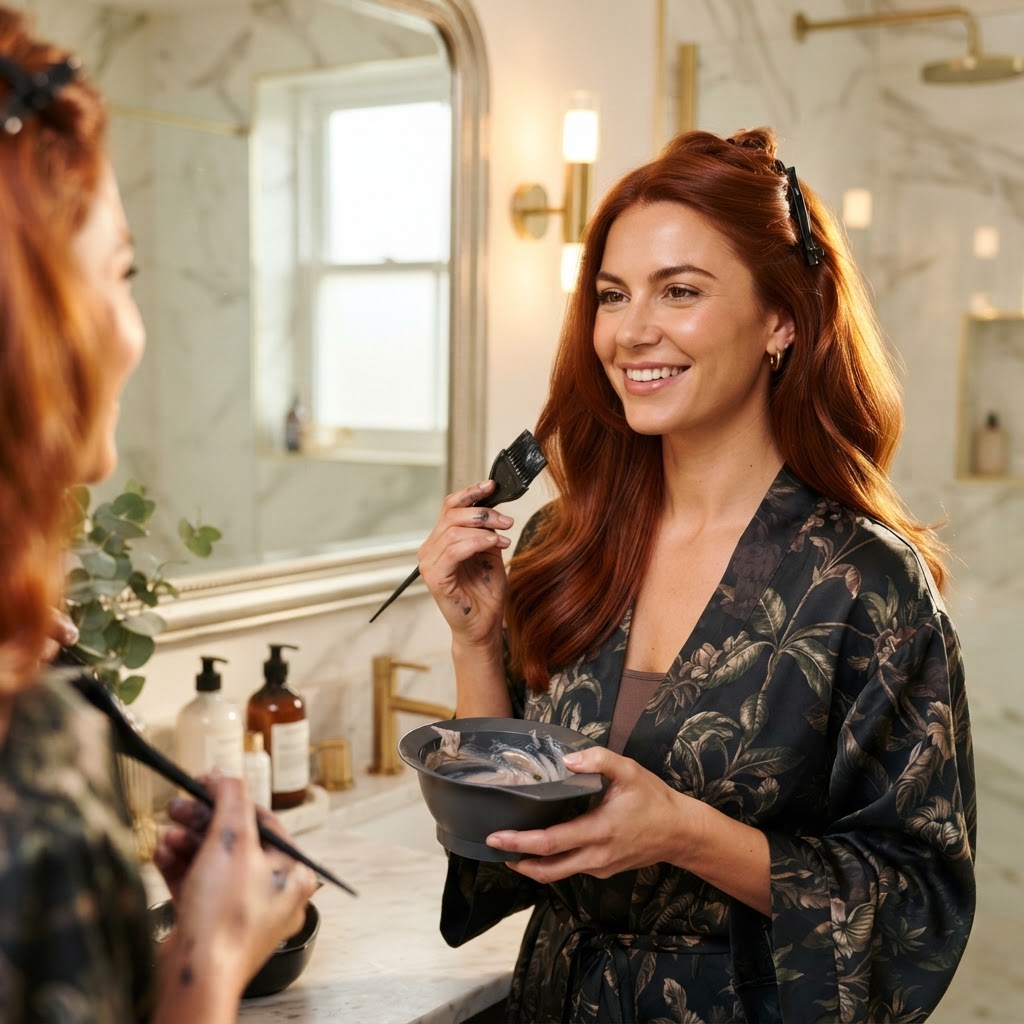
Permanent Hair Dye vs Semi-Permanent: Which Is Right For You?
Permanent Hair Dye, semi-permanent, demi-permanent, hair dye types, hair colour
Deciding between permanent hair dye and semi-permanent shades? Uncover the key differences, hair dye types, and expert tips to find your perfect match.
Understanding Hair Dye Types
When embarking on a home colouring journey, the sheer variety of boxes on the shelf can feel overwhelming. To achieve your dream shade without compromising your hair's health, you first need to understand the science behind different hair dye types. Broadly speaking, home hair colour falls into three main categories: semi-permanent, demi-permanent, and permanent hair dye.
Semi-Permanent Hair Dye
Semi-permanent colour is the lowest-commitment option available. These formulas do not contain ammonia or require a developer (hydrogen peroxide). Instead of opening the hair cuticle to deposit colour deep inside the cortex, semi-permanent dyes simply coat the outside of the hair shaft.
Because they only sit on the surface, these dyes are incredibly gentle and typically wash out completely within 4 to 8 shampoos. They are fantastic for experimenting with vibrant fashion colours, adding a temporary gloss, or neutralising brassy tones, but they cannot lighten your natural hair or provide full grey coverage.
Demi-Permanent Hair Colour
Demi-permanent sits comfortably between semi and permanent formulas. It uses a low-volume developer (usually 5 to 10 volume, containing 1.5% to 3% hydrogen peroxide). This slight chemical activation opens the hair cuticle just enough for the colour to gently penetrate, but not enough to drastically alter your natural base pigment.
Demi-permanent dyes typically last around 24 to 28 washes before gently fading away, which prevents a harsh root line from developing. While they cannot lighten hair, they are brilliant for blending early greys, darkening your natural shade, or refreshing faded mid-lengths and ends.
Permanent Hair Dye
Permanent hair dye is designed for long-lasting, transformative results. These formulas utilise stronger developers (typically 20, 30, or 40 volume) alongside ammonia (or an ammonia substitute like MEA). The ammonia fully lifts the cuticle, allowing the hydrogen peroxide to lighten your natural melanin and permanently deposit the new pigment deep into the hair's cortex.
Permanent colour will not wash out; it has to grow out. It is the only option if you want to lighten your virgin hair by several shades, radically change your look, or achieve 100% coverage on stubborn grey hair.
Permanent Hair Dye vs Semi-Permanent: Key Differences
How do you choose between the two extremes? It comes down to your hair goals, condition, and commitment level.
- Longevity: Permanent hair dye stays until it grows out or is cut off. Semi-permanent fades completely in a matter of weeks.
- Lightening Power: Permanent dye (with a 20 or 30 volume developer) can lift your base shade. Semi-permanent has zero lifting ability.
- Grey Coverage: Permanent is the gold standard for opaque, 100% grey coverage. Semi-permanent might lightly stain greys but will not cover them.
- Damage Potential: Because permanent dye alters the internal structure of the hair, it carries a higher risk of dryness and damage. Semi-permanent is often formulated with conditioning agents that leave hair feeling healthier than before.
What You'll Need
Before you mix a single drop of colour, ensure your home salon is fully equipped. Having the right tools makes the difference between a patchy mess and a professional-looking finish.
- Your chosen hair colour kit (buy two boxes if your hair is past shoulder length or very thick)
- A non-metallic mixing bowl and an applicator brush (far superior to bottle application)
- A pair of latex or nitrile gloves
- Barrier cream (petroleum jelly works perfectly) to protect your hairline and ears
- Sectioning clips to separate your hair cleanly
- An old towel and a dark-coloured button-down shirt that you don’t mind ruining
- A timer (your phone works perfectly)
Step-by-Step: Choosing and Applying
Applying dye safely and effectively requires method and patience. Follow these steps for the best results.
1. The Patch Test
Whether using a temporary gloss or a permanent hair dye, always perform an allergy alert test 48 hours before colouring. Dab a tiny amount of the colourant behind your ear with a cotton swab and wait to see if any redness or itching occurs.
2. Prepare Your Canvas
Aim to colour hair that is "second-day dirty." Freshly washed hair lacks the natural oils that help protect your scalp from chemical irritation, while hair that is too dirty or loaded with dry shampoo can block the dye from penetrating evenly.
3. Mix Your Formula
If you are using a permanent or demi-permanent dye, mix the colourant and developer in your bowl until completely smooth. Do not mix until you are immediately ready to apply, as the chemical reaction has a limited lifespan.
4. Apply Methodically
- For grey coverage (Permanent): Start at the front hairline and your natural parting, where greys are most visible. Work in thin, even sections.
- For root touch-ups: Apply the permanent dye only to the new regrowth. Overlapping onto previously coloured hair causes "banding" and unnecessary damage.
- For a full head of semi-permanent: Apply generously from roots to ends, ensuring every strand is fully saturated. Massage it through like a hair mask.
5. Time It Right
Strictly follow the manufacturer's recommended processing time. Leaving permanent hair dye on for too long can lead to severe breakage and scalp burns. Leaving it on for too little time may result in sheer, uneven coverage or brassy undertones. Semi-permanent dyes are more forgiving, but 20-30 minutes is usually the sweet spot.
Aftercare for Coloured Hair
The work doesn't stop once you rinse the dye down the drain. Proper aftercare is vital to maintaining vibrancy and hair health.
- Wait 72 Hours: Give your hair cuticles time to fully close by waiting at least three days before your first post-dye shampoo.
- Switch Your Shampoo: Sulphate-free, colour-safe shampoos are essential. Sulphates act like aggressive detergents that aggressively strip away both natural oils and artificial pigment.
- Turn Down the Temperature: Hot water opens the hair cuticle, allowing dye molecules to slip out. Always rinse your hair with lukewarm or cool water.
- Heat Protection: Minimise the use of flat irons and curling wands. When you do use heat, always apply a high-quality thermal protectant, as heat aggressively fades colour.
Common Mistakes to Avoid
- Trusting the box model: The colour on the front of the box is an approximation. Always refer to the colour chart on the back or side, which shows predicted results based on your starting shade.
- Applying permanent dye over the ends every time: If you dye your roots every four weeks, running permanent dye through to the ends each time will leave your lengths dark, matte, and damaged. Instead, use a demi-permanent or semi-permanent gloss on the ends for the last 10 minutes of processing to refresh the tone safely.
- Going too dark too fast: Permanent colour is notoriously difficult to remove. If you are torn between two shades, always choose the lighter one. It is much easier to add a darker demi-permanent gloss later than it is to bleach out a dye job that looks like a harsh black helmet.
FAQ
Can I use a semi-permanent dye over permanent hair dye? Yes, absolutely! In fact, this is highly recommended by professionals. Using a semi-permanent gloss over faded permanent colour is a safe, damage-free way to refresh vibrancy and add shine without overlapping harsh chemicals.
Will demi-permanent dye cover my grey hair? Demi-permanent colour will blend grey hairs, making them look like soft highlights, but it will not provide 100% opaque coverage. If you have more than 50% grey hair and want it completely gone, you will need to use a permanent hair dye.
Why did my permanent dye wash out so quickly? If your permanent colour is fading rapidly, your hair may be highly porous or damaged from previous chemical treatments. When the cuticle is compromised, it cannot hold onto the dye molecules. In this case, intensive protein treatments and bond-builders are needed before your next colouring session.
Do I need a developer for semi-permanent hair colour? No. True semi-permanent dyes are "direct dyes" that are applied straight from the bottle or tube. If a box tells you to mix two bottles together, it is a demi-permanent or permanent formula.