
Permanent Hair Dye vs Semi-Permanent: Which is Right for You?
Hair Dye Guide, Permanent Hair Colour, Semi-Permanent, Demi-Permanent, Home Hair Dye
Confused by hair dye types? Discover the differences between permanent, semi-permanent, and demi-permanent hair dye to find your perfect match.
If you're standing in the hair colour aisle (or browsing online) feeling utterly overwhelmed by the sheer number of boxes, you are not alone. Choosing between permanent hair dye, semi-permanent, and demi-permanent formulas is the first and most crucial step to achieving your dream hair at home.
Whether you want to cover stubborn greys, experiment with a bold fashion colour, or simply add a glossy shine to your natural hue, picking the right product will make all the difference. Let's break down the different hair dye types so you can colour with confidence.
The Main Hair Dye Types Explained
Before you mix any formulas, it helps to understand the basic chemistry of how different dyes interact with your hair.
Permanent Hair Dye
What it is: The most long-lasting option available, designed to permanently alter your hair's natural pigment and structure. How it works: Permanent hair dye uses ammonia (or an ammonia substitute) and a developer (usually 20 or 30 volume). The ammonia lifts the hair cuticle, allowing the developer to penetrate the inner cortex, remove natural pigment, and deposit the new colour [3]. Best for: 100% grey coverage, lightening your hair (up to a few shades), or making a drastic, long-lasting colour change [6].
Demi-Permanent Hair Dye
What it is: The perfect middle ground. It lasts longer than semi-permanent but doesn't permanently alter your hair structure. How it works: Demi-permanent dyes are typically ammonia-free but are mixed with a very low-volume developer (usually 5 to 15 volume). This gently opens the cuticle just enough for the colour to penetrate slightly into the hair shaft [3, 8]. Best for: Blending first greys (up to 70% coverage), refreshing faded ends, adding depth, or trying a new shade without a long-term commitment [4]. It gradually fades over 24 to 28 washes.
Semi-Permanent Hair Dye
What it is: A short-term, low-commitment wash of colour. How it works: Semi-permanent hair dye contains no ammonia and requires no developer. It is a "direct dye" that simply coats the outside of the hair shaft (the cuticle) without penetrating it [4, 8]. Best for: Experimenting with vibrant fashion colours, adding a glossy tint, or neutralising brassy tones. It typically washes out in 8 to 15 shampoos [5].
What You'll Need
Depending on which route you choose, your shopping list will vary slightly:
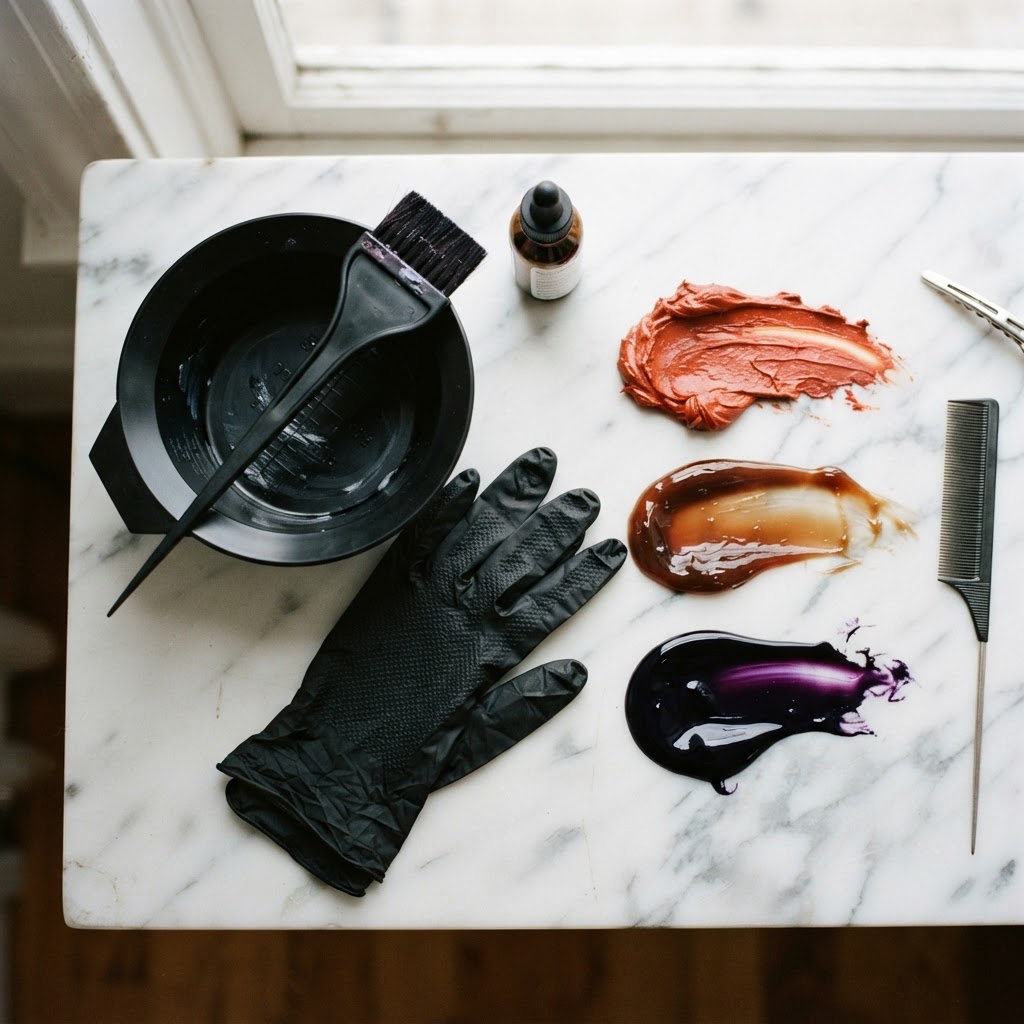
- For Permanent/Demi-Permanent: The colour tube, a developer (ensure you have the correct volume), a mixing bowl, a tint brush, and gloves.
- For Semi-Permanent: The direct dye (often comes in a tub or bottle), gloves, and a tint brush.
- For all types: A barrier cream (like petroleum jelly) for your hairline, an old t-shirt, sectioning clips, and a timer.
Step-by-Step: How to Choose
Still unsure? Follow this simple checklist to find your match:
- Assess your greys: If you want to completely obliterate grey hair, you must use permanent hair dye [6]. If you just want to soften and blend a few greys, demi-permanent is ideal [4]. Semi-permanent will not cover greys [8].
- Determine your lightness goal: Do you want to go lighter than your current colour? Permanent dye (with a higher volume developer) or bleach is required [3, 5]. Demi and semi-permanent dyes cannot lighten hair [3, 8].
- Consider your commitment level: If you love changing your hair colour every month, stick to semi-permanent or demi-permanent glosses. If you want a signature look that lasts, go permanent.
Common Mistakes to Avoid
- Overlapping permanent colour: Applying permanent dye over previously coloured hair every time you dye your roots will cause severe damage and "colour banding" (where the ends look much darker than the roots). Instead, use permanent on the roots and a demi-permanent gloss on the ends to refresh the tone [8].
- Expecting semi-permanent to lighten: Remember, without developer and ammonia, you cannot lift dark hair to a lighter shade [3].
- Skipping the patch test: Always perform an allergy alert test 48 hours before using any hair dye types, even if you've used the brand before.
Aftercare for Coloured Hair
No matter which dye you choose, proper aftercare will extend its life:
- Wash less frequently: Water is the number one enemy of hair colour. Try to stretch your wash days.
- Use colour-safe products: Switch to sulphate-free shampoos and conditioners designed for coloured hair.
- Turn down the heat: Hot water opens the hair cuticle, allowing colour to wash down the drain. Rinse with cool or lukewarm water.
- Protect from the sun: UV rays fade hair colour quickly. Wear a hat or use a UV-protectant spray when spending time outdoors.
FAQ
Does demi-permanent cover grey better than semi-permanent?
Yes. Because demi-permanent uses a low-volume developer, it can penetrate the hair slightly to blend up to 70% of greys. Semi-permanent only coats the hair and does not provide grey coverage [4, 6].
Is demi-permanent less damaging than permanent hair dye?
Yes. Demi-permanent formulas are generally ammonia-free and use a much lower volume of developer, meaning they don't blow open the hair cuticle as aggressively as permanent dyes [4].
Can I use semi-permanent dye over permanent dye?
Absolutely! In fact, using a semi-permanent or demi-permanent gloss over faded permanent colour is the best way to refresh your lengths and ends without causing unnecessary damage [8].