
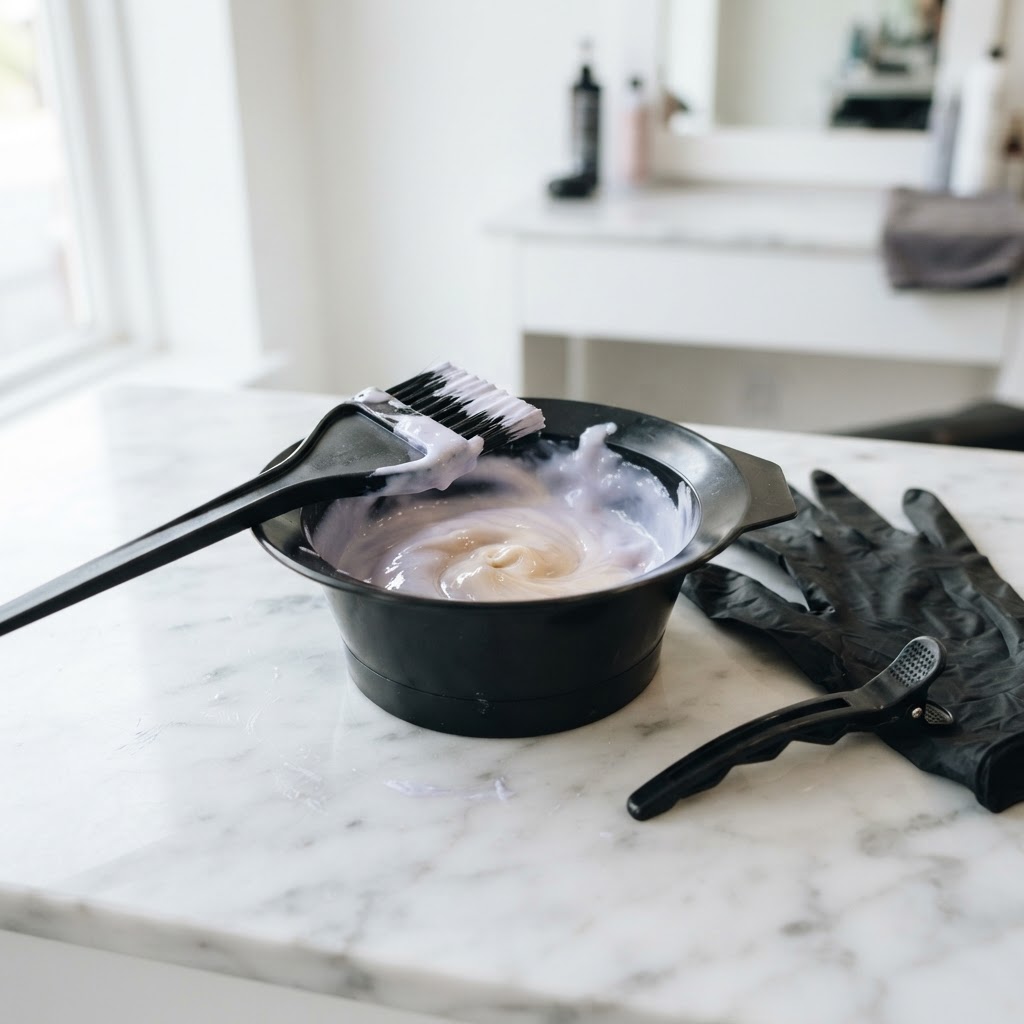
How to Use Hair Toner at Home: A Complete Step-by-Step Tutorial
hair toner, toning blonde hair, purple shampoo, brassy hair, hair dye at home, hair care
Banish brassy hair for good! Learn how to use hair toner at home with our expert step-by-step guide, from choosing the right shade to flawless application.
Why it happens
If you have ever lightened your hair, you are probably familiar with the dreaded brassiness. Unless your hair is naturally a very light blonde, it contains underlying red and orange pigments. When you bleach or lighten your hair, the chemicals lift away your natural colour, exposing these warm undertones. Over time, factors like hard water, sun exposure, and heat styling can also cause your beautiful blonde or highlighted hair to turn yellow or orange.
This is where hair toner comes in. A toner is a pigment-depositing product that neutralises unwanted warm tones, helping you achieve a cooler, shinier, and more natural-looking shade. It does not lighten your hair further; rather, it fine-tunes the colour you already have.
What you'll need
Before you begin toning blonde hair (or lightened brunette hair) at home, it is essential to gather the right tools. Having everything prepared will make the process smooth and prevent patchy results.
- The right toner: Choose a demi-permanent toner, a colour-depositing gloss, or toning drops. If your hair is yellow, you need a purple-based toner. If it is orange, opt for a blue-based toner.
- Developer (if required): If using a demi-permanent salon-style toner, you will need a low-volume developer (usually 5 or 10 volume) to activate it without lifting your base colour.
- Applicator brush and bowl: For precise mixing and application.
- Sectioning clips: To divide your hair and ensure even saturation.
- Protective gloves: To prevent staining your hands.
- An old t-shirt or cape: To protect your clothing.
- Clarifying shampoo: To prep your hair by removing product build-up.
Step-by-step
Mastering how to use hair toner at home is all about preparation, timing, and technique. Follow these steps for a salon-worthy finish.
1. Prep and cleanse
Start by washing your hair with a clarifying or sulfate-free shampoo. This removes hard water minerals and product build-up that could block the toner from absorbing evenly. Do not condition just yet. Towel-dry your hair until it is about 70-80% dry—damp, but not dripping.
2. Mix your toner
If you are using a demi-permanent toner that requires a developer, mix it in your bowl according to the manufacturer's instructions (a common ratio is 1 part toner to 2 parts developer). If you are using a ready-to-use gloss or mask, simply dispense it into your bowl.
3. Section your hair
Divide your damp hair into four clean quadrants: part it down the middle, and then from ear to ear. Secure each section with a clip. Working in sections is the secret to avoiding patchy, uneven colour.
4. Apply the toner
Put on your gloves. Start applying the toner to the areas that are the most brassy—usually the mid-lengths and ends. Use your tint brush to paint the product on, taking small slices of hair at a time. If your roots are also brassy (often called "hot roots"), apply the toner there as well. Once applied, gently comb through each section to ensure the product is evenly distributed.
5. Process and time it
Timing is critical. Depending on the product, toners can process anywhere from 2 to 20 minutes. Keep a close eye on your hair; you want to stop when the brassy hair looks neutralised, not when it starts turning purple or grey. If in doubt, rinse it out early—it is much easier to re-tone than to fix over-toned hair.
6. Rinse and condition
Rinse your hair thoroughly with lukewarm water until the water runs clear. Follow up with a deeply nourishing, colour-safe conditioner or a protein-rich hair mask to close the cuticle and restore moisture.
Aftercare
To keep your freshly toned hair looking vibrant for as long as possible, you need a solid aftercare routine.
- Wash less frequently: The more you shampoo, the faster your toner will fade. Try to stretch the time between wash days.
- Use cool water: Hot water opens the hair cuticle, causing colour to wash out faster. Always rinse with lukewarm or cool water.
- Incorporate purple shampoo: To maintain your ashy or neutral blonde between full toning sessions, use a purple shampoo or blue shampoo once a week. Leave it on for 1 to 5 minutes to gently neutralise everyday brassiness.
- Protect from heat and sun: Always use a heat protectant before styling, and consider wearing a hat in strong sunlight to prevent UV-induced brassiness.
Common mistakes
- Applying to soaking wet hair: If your hair is too wet, the water will dilute the toner, leading to weak results. Ensure it is towel-dried and damp.
- Leaving it on too long: Leaving toner on past the recommended time will not make it last longer; it will just turn your hair a dull, muddy grey or purple.
- Using the wrong colour: Remember the colour wheel. Purple cancels yellow (for light blondes), and blue cancels orange (for darker blondes and brunettes). Using purple on orange hair will not work.
FAQ
How often should I re-tone my hair?
For most people, a full demi-permanent toner needs refreshing every 4 to 6 weeks. However, highly porous hair or frequent washing may require you to tone more often. You can use pigmented shampoos or drops every 1 to 2 weeks to maintain the shade.
Can I leave toner on overnight?
Absolutely not. Toners deposit pigment very quickly. Leaving one on overnight will ruin your colour and could potentially cause scalp irritation or chemical burns.
Will toner lighten my dark roots?
No. Toners are designed to deposit colour, not lift it. If you use a low-volume developer (like 5 or 10 vol), it will not lighten your natural, unbleached hair.
Can I tone hair I haven't bleached?
Yes! Toner works beautifully on natural blondes, highlights, or balayage that has gone brassy from sun or heat damage. It will simply refine the tone without altering the lightness.