
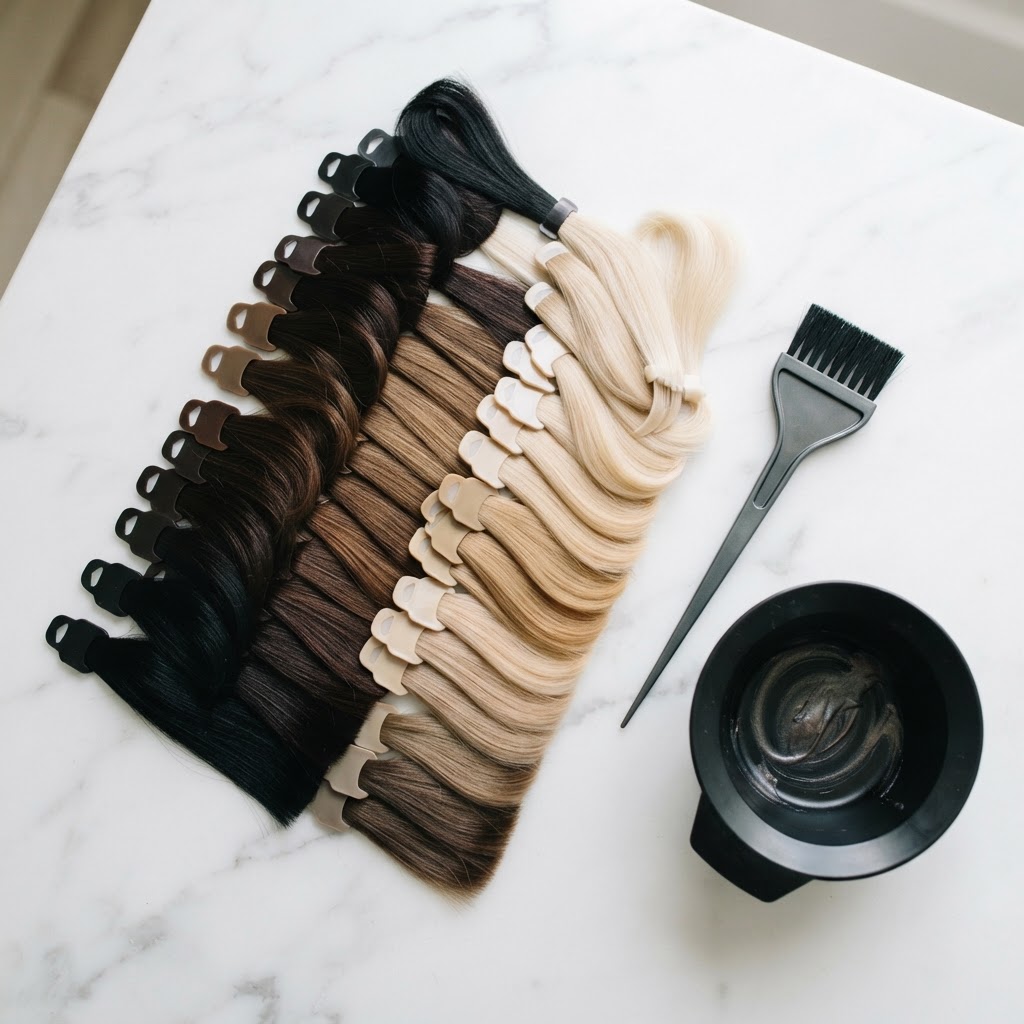
How to Use a Hair Color Chart to Find Your Perfect Shade
Hair Color Chart, At-Home Hair Dye, Hair Colouring Guide, Shade Selector, Hair Dye Levels
Discover how to read a Hair Color Chart to find your perfect shade. Our expert guide explains levels, tones, and choosing a shade for at-home dyeing.
Welcome to HairColourChart.online! If you have ever felt overwhelmed staring at the endless rows of box dyes in the beauty aisle, you are certainly not alone. Decoding the numbers and letters on a hair dye box can feel like trying to read a secret language. However, using a Hair Color Chart is the ultimate professional secret to achieving beautiful, salon-quality results in your own bathroom.
Whether you are looking to cover stubborn greys, add a subtle balayage, or completely transform your look, understanding how a hair colour chart works takes the guesswork out of the process. In this comprehensive guide, we will walk you through exactly how to read these charts, how to use a shade selector, and the practical steps you need to take to achieve your dream hair.
Why Understanding the Hair Colour Chart Matters
When you look at a professional hair colour chart, you are looking at a precise map of hair depth and tone. The system relies on a few key elements working together to tell you exactly what result you will get. According to Hair Dye Color Charts: Read, Match & Pick Your Perfect Shade, every hair colour level chart uses a simple 1–10 scale.
- Level 1 is jet black.
- Level 10 is the palest platinum blonde.
Your hair's level plays a massive role in how it reacts to chemical colour. Darker levels require more lift (often using bleach or higher-strength developers) to achieve lighter shades, while lighter levels are more prone to brassiness and require careful toning.
What You'll Need Before Choosing a Shade
Before you even look at a shade selector, you need to assess your current hair. Here is what you will need to get an accurate reading:
- Natural Daylight: Bathroom lighting can cast yellow or blue shadows. Always assess your hair near a window during the day.
- A Handheld Mirror: To check the back of your head and your roots.
- Your Hair's History: Be honest with yourself about what is currently on your hair. Colour cannot lift colour; if you have previously dyed your hair dark brown, applying a blonde box dye will not lighten it.
As noted by What is My Hair Color Level? How it Affects Dye Results, if your hair has been previously dyed, you must look at your roots or natural regrowth to find your true starting level.
Step-by-Step: How to Use a Shade Selector
Finding your perfect match is a simple process once you break it down into manageable steps.
Step 1: Identify Your Starting Level
Take a small section of your hair, fan it out, and hold it up to the natural light. Compare it to the 1-10 scale on your hair colour chart. Are you a medium brown (Level 5) or a dark blonde (Level 7)?
Step 2: Determine Your Desired Tone
Once you have your level, you need to pick a tone. Tones are the subtle hues that give your hair character—like ash, gold, copper, or mahogany.
Step 3: Choose the Right Developer
If you are buying professional tubes of colour rather than a standard box dye, you will need to select a developer (hydrogen peroxide) to mix with your colour cream.
- 10 Volume (3%): Deposits colour only. Great for going darker or toning.
- 20 Volume (6%): The standard for at-home dyeing. It provides 1-2 levels of lift and is essential for 100% grey coverage.
- 30 Volume (9%): Lifts 2-3 levels. Best used with caution at home.
Decoding the Numbers and Letters
Have you ever wondered what a number like '7.1' or '7A' means? The first number always anchors your result on the depth scale (the level). The following numbers or letters indicate the tone.
Interestingly, there are regional differences in how brands label their products. Hair Dye Color Charts: Read, Match & Pick Your Perfect Shade explains that European systems typically use numbers for tone (e.g., 7.1 means Level 7 Ash), while American charts often use letters (e.g., 7A).
If you see a double number, like 7.44, this indicates an intense double tone—in this case, an intense copper blonde.
Common Mistakes When Colouring at Home
Even with a hair colour chart in hand, it is easy to make a misstep. Avoid these common pitfalls:
- Making Drastic Changes: Hair Coloring Tips & Charts to Pick the Right Shade - Rumbie advises picking a shade within two levels of your current colour for the best results. Going too light or too dark in a single step can severely damage your hair.
- Ignoring Underlying Pigment: When you lighten hair, you expose warm underlying pigments (red, orange, or yellow). If you are lifting a brunette to a blonde, you must use an ash or violet tone to neutralise the inevitable brassiness.
- Skipping the Patch Test: Always perform an allergy alert test 48 hours before applying any chemical to your scalp, even if you have used the brand before.
Aftercare: Keeping Your Colour Vibrant
Choosing a shade is only half the battle; maintaining it is where the real work begins.
- Wash Less Frequently: Try to wash your hair only 2-3 times a week using a sulphate-free, colour-safe shampoo.
- Touch-Up Timings: For natural shades close to your base, you can stretch touch-ups to 8-10 weeks. For full-head permanent colour or grey coverage, aim for 6-8 weeks.
- Use a Toner: If your colour starts to look brassy after a few weeks, a gloss or toning shampoo can refresh the tone without the need for a full dye job.
Frequently Asked Questions (FAQ)
How do I figure out what colour to dye my hair?
Start by looking at your skin's undertone. According to which hair colour will suit my skin tone?, warm undertones look incredible with golden, caramel, or copper shades. If you have cool undertones, you will shine in ash blondes, cool brunettes, or violet-based reds.
Can you mix different hair dye shades?
Yes, but with a strict caveat: you should only mix shades from the exact same brand and product line. Mixing a Level 6 and a Level 8 will generally give you a custom Level 7 result. Never mix different brands, as their chemical formulations can react unpredictably.
How do I cover stubborn grey hair?
Grey hair lacks natural pigment and can be coarse, making it resistant to colour. Always use a 20-volume developer for grey coverage. If you are using a fashion shade (like a bright red or ash blonde), mix it with a 'natural' or 'neutral' shade (usually denoted by an 'N' or '.0') to anchor the colour and prevent it from looking translucent or overly bright on the white hairs. Leave the colour on for the full 45 minutes usually recommended for grey coverage.
Armed with your new knowledge of the hair colour chart, that box on the shelf is no longer a gamble—it is a calculated, confident decision. Happy colouring!