
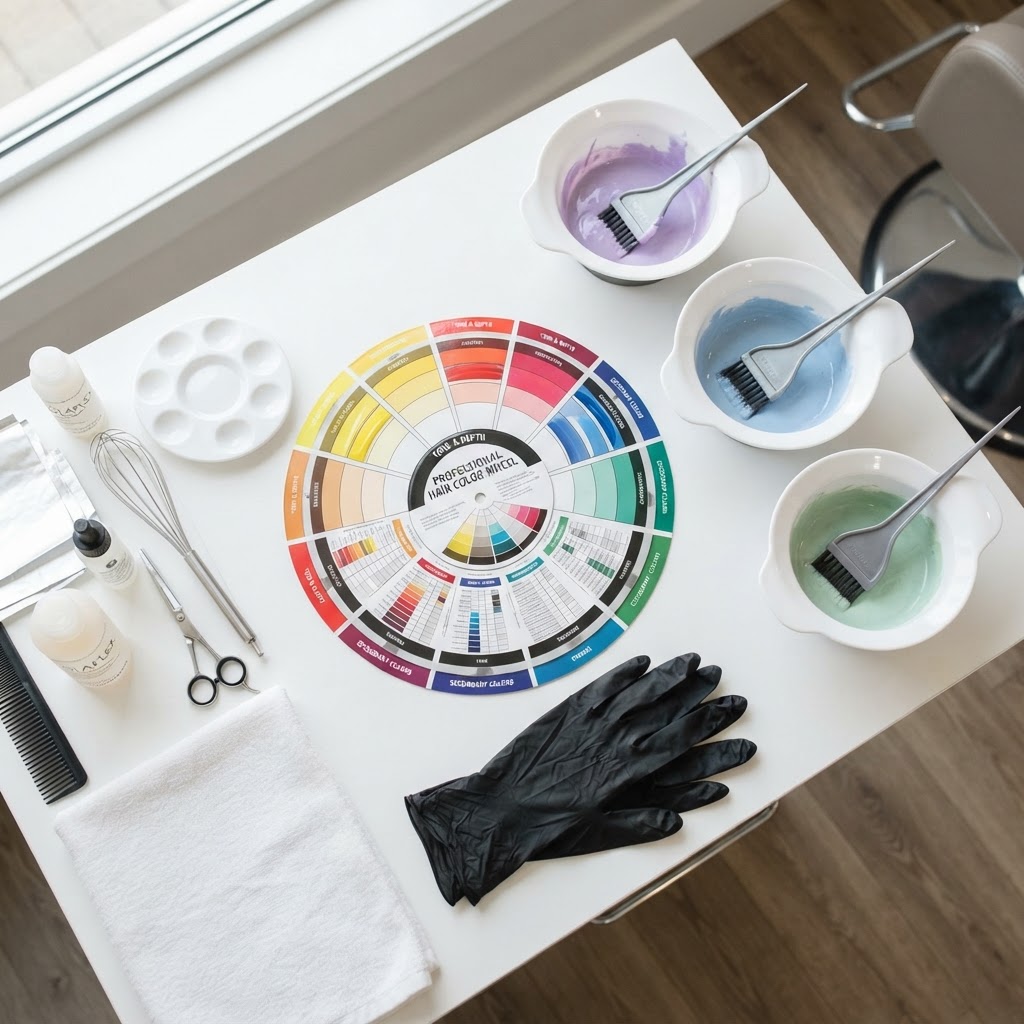
How to Read a Hair Color Wheel and Pick Complementary Shades
hair colour theory, at-home hair dye, toning, colour correction
Learn how to read a hair color wheel and pick complementary shades for flawless at-home dyeing. Master colour theory and toning with our expert UK guide.
Welcome back to HairColourChart.online! If you have ever attempted to dye your hair at home and ended up with an unexpected brassy orange or a muddy green, you are not alone. The secret to achieving salon-quality results in your own bathroom isn't just about buying the most expensive box dye; it is about understanding the science of colour. Today, we are going to break down exactly how to read a hair color wheel and pick complementary shades so you can colour, correct, and tone your hair with absolute confidence.
Understanding Basic Colour Theory for Hair
Before you mix any chemicals, it is crucial to understand basic colour theory. The hair color wheel is a visual representation of how colours relate to one another, originally based on the principles created by Sir Isaac Newton, as noted in How the Color Wheel Really Works - Hair Stylist's Guide.
The wheel is divided into warm tones (reds, oranges, yellows) and cool tones (blues, greens, violets). When we dye or bleach hair, we expose the hair's natural underlying pigments. For instance, dark hair lifts to red or orange, while lighter hair lifts to yellow. Understanding where your hair currently sits on this wheel is the first step to achieving your dream shade.
How to Read a Hair Color Wheel and Pick Complementary Shades
The golden rule of the hair colour wheel is simple: colours that sit directly opposite each other on the wheel are complementary colors. In the world of hair dye, complementary colours neutralise or cancel each other out.
Here is how the opposites pair up for hair toning:
- Purple and Yellow: If your bleached hair looks like the inside of a banana (Level 9 or 10), you need a purple-based toner to neutralise the yellow and create a cool, icy blonde.
- Blue and Orange: If your hair has lifted to a brassy, copper-orange (Level 7 or 8), a blue-based toner will cancel out the orange, leaving you with a neutral light brown or dark blonde.
- Green and Red: If you have dark hair that has lifted to a harsh red (Level 4 or 5), a green-based (matte/ash) toner will neutralise the redness to create a rich, cool brunette.
As explained in The Hair Color Wheel Explained - Ugly Duckling, using these opposite shades is the foundation of all colour correction and toning.
What You'll Need for At-Home Toning
To put colour theory into practice, you need the right tools. Here is your professional at-home toolkit:
- Demi-Permanent Toner: Choose a shade with the correct base (ash/blue, violet, or matte/green) for your current hair level.
- Low-Volume Developer: Always use a 5-volume or 10-volume developer for toning. You only want to deposit colour, not lift the hair further. Never use 30 or 40-volume developer for toning, as this will cause unnecessary damage.
- Non-Metallic Mixing Bowl and Tint Brush: Metal can react with hair dye chemicals.
- Sectioning Clips: To ensure even application.
- Salon Gloves: To protect your hands from staining and chemicals.
Step-by-Step: Using Complementary Colors to Tone
Ready to neutralise those unwanted tones? Follow these expert steps for a flawless finish:
- Assess Your Current Level: Look at your hair in natural daylight. Is it pale yellow (Level 10), yellow-orange (Level 8), or bright orange (Level 7)? You must identify the exact undertone you are dealing with, as highlighted in Hair Color Chart: How It Applies to Your Hair | All Things Hair US.
- Select Your Toner: Pick a toner that is the exact complementary colour to your unwanted undertone. Ensure the toner is the same level (or one level darker) than your current hair. A Level 10 purple toner will do absolutely nothing to fix Level 7 orange hair.
- Mix Your Formula: In your non-metallic bowl, mix your toner and developer. The standard ratio is usually 1 part toner to 2 parts developer (1:2), but always read the manufacturer's instructions.
- Apply to Damp Hair: Towel-dry your hair so it is damp but not dripping. Section your hair into four quadrants. Using your tint brush, apply the toner starting from the roots (which are usually the warmest) and pull it through to the ends.
- Process and Monitor: Toning happens fast! Leave the mixture on for 10 to 20 minutes. Check a small strand every 5 minutes by wiping away a bit of the dye with a damp towel.
- Rinse and Condition: Once you see the unwanted tones neutralised, rinse thoroughly with lukewarm water until the water runs clear. Follow up with a deep conditioning treatment to seal the cuticle.
Common Mistakes When Using the Hair Colour Wheel
Even with the best intentions, at-home colourists can make errors. Avoid these common pitfalls:
- Not Lifting the Hair Enough First: You cannot tone dark orange hair into a platinum blonde just by using purple dye. As noted in Hair Color Wheel Theory Explained, you must bleach the hair to the correct level (Level 9 or 10) before a purple toner will work.
- Over-Toning: Leaving an ash or blue toner on porous, bleached hair for too long can result in dull, grey, or even blue-tinted hair. Always keep a close eye on the clock.
- Using the Wrong Complementary Colour: Applying a blue toner to pale yellow hair will result in green hair (because blue + yellow = green). Always match the exact opposite on the wheel.
Aftercare for Colour-Treated Hair
Once you have achieved your perfect shade, you need to maintain it. Toning is not permanent, and warm tones will naturally try to peek through after a few weeks.
- Switch to Sulphate-Free Shampoo: Sulphates strip colour rapidly. Use a gentle, colour-safe cleanser.
- Use Colour-Depositing Products: Maintain your results by using a purple shampoo (for blondes) or a blue shampoo (for brunettes) once a week. This deposits a tiny amount of complementary pigment to keep brassiness at bay.
- Wash in Cool Water: Hot water opens the hair cuticle, allowing your beautiful toner to wash down the drain. Stick to lukewarm or cool water.
Frequently Asked Questions (FAQ)
How do I fix hair that has turned green?
If your hair has taken on a swampy green tint (often caused by applying an ash blonde dye over yellow hair, or from chlorine exposure), you need to look at the colour wheel. The opposite of green is red. You can neutralise the green by using a very diluted warm red or pink colour-depositing mask, or a warm copper toner.
What is the best toner for orange brassiness?
If your hair is distinctly orange, you need a blue-based toner. Look for toners with the word "Ash" in the title, and ensure you are using a Level 7 or 8 toner. Purple shampoo will not fix orange hair; you need blue.
Can I mix my own complementary colours using semi-permanent dyes?
Yes! Many creative colourists mix a tiny drop of semi-permanent blue or purple dye into a white conditioner to create a custom toning mask. However, you must be very careful with the ratios. It is often safer for beginners to use pre-mixed, commercially formulated toners to ensure even, predictable results.