
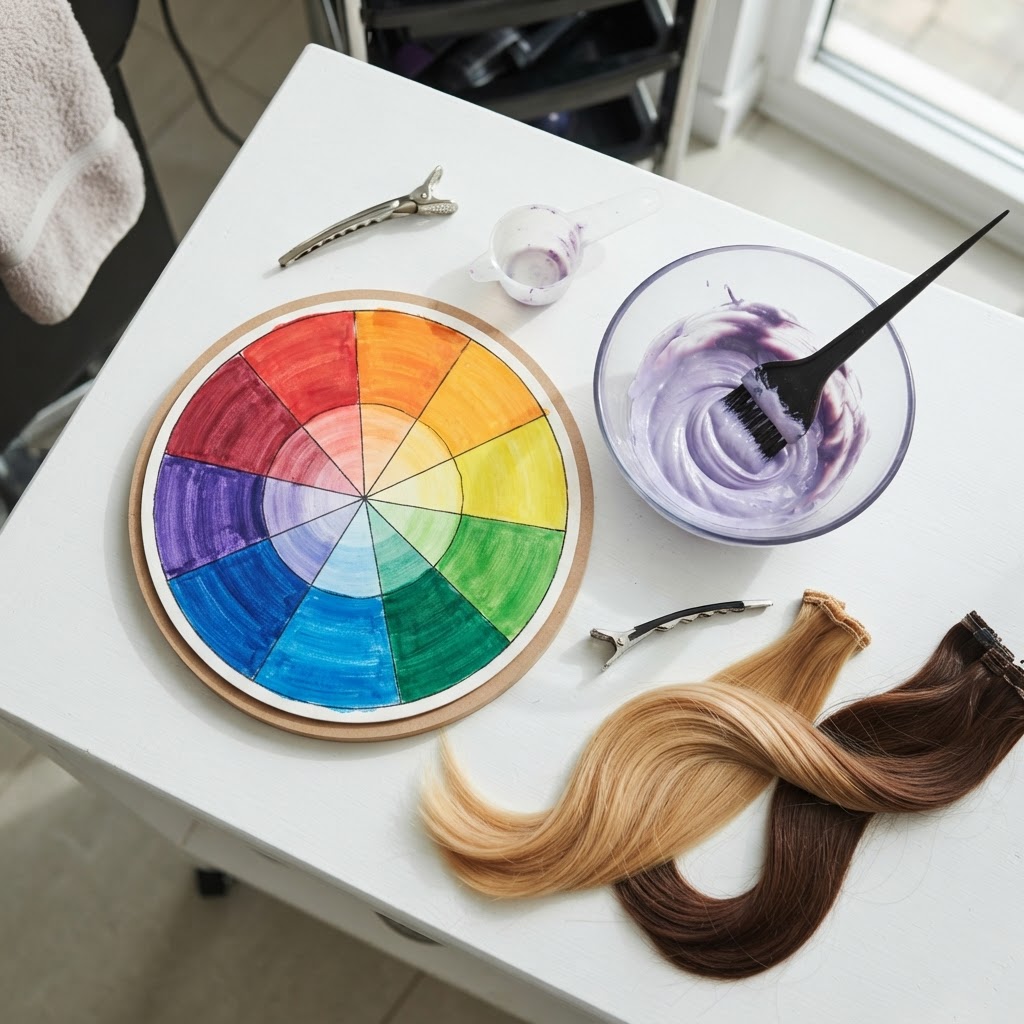
How to Read a Hair Color Wheel and Pick Complementary Shades
hair color wheel, colour theory, toning, at-home hair dye, hair care
Master the hair color wheel with our expert guide. Learn colour theory, how to pick complementary colors, and perfect your toning for flawless hair.
Welcome to HairColourChart.online! If you have ever attempted to dye your hair at home and ended up with a brassy blonde or a muddy brunette, you are not alone. The secret to achieving salon-worthy results in your own bathroom lies in understanding the hair color wheel.
Whether you are trying to neutralise unwanted warmth, enhance your natural shade, or embark on a bold new look, mastering basic colour theory is your best defence against hair dye disasters. In this comprehensive guide, we will break down exactly how to read a hair color wheel, how to select complementary colors, and the practical steps for flawless at-home toning.
The Basics of Colour Theory for Hair
Before you mix any developer or apply any dye, it is crucial to understand the foundation of hair colouring: colour theory. At its core, colour theory explains how different shades interact, mix, and cancel each other out.
According to Hair Color Theory Explained: Color Wheel, Tone & Formulation, the "Law of Color" dictates that every shade is created from three primary colours: red, yellow, and blue.
- Primary Colours: Red, yellow, and blue. These cannot be created by mixing other colours.
- Secondary Colours: Orange, green, and violet. These are created by mixing equal parts of two primary colours (e.g., red and yellow make orange).
- Tertiary Colours: Created by mixing a primary colour with a neighbouring secondary colour (e.g., blue-violet or red-orange).
When you dye your hair, you are never just painting over a blank white canvas. You are mixing the artificial dye with your hair's underlying natural pigment. This is why applying an ash blonde box dye over dark brown hair often results in a brassy orange—the underlying red and yellow pigments are exposed during the lifting process.
How to Read a Hair Color Wheel
The hair color wheel is a visual representation of these colours arranged in a circle. It is divided into two main halves: warm tones and cool tones.
- Warm Tones: Located on the right side of the wheel, these include reds, oranges, and yellows. They reflect light and make hair look brighter and more vibrant.
- Cool Tones: Located on the left side of the wheel, these include blues, greens, and violets (often referred to as ash tones). As noted by Hair Color Wheel Explained - Perfect Locks, cool tones absorb light and are primarily used to neutralise unwanted warmth.
When reading the wheel, pay attention to the numbers and letters on your hair dye box. Professional and high-quality at-home dyes use a numbering system. The first number indicates the "level" (how light or dark the hair is, from 1 for black to 10 for pale blonde), while the letters or numbers after the decimal indicate the tone (e.g., .1 or A for Ash, .3 or G for Gold).
The Magic of Complementary Colors in Toning
The most powerful application of the hair color wheel is understanding complementary colors. Complementary colors are shades that sit directly opposite each other on the wheel. When mixed together, they neutralise or cancel each other out, creating a neutral brown, grey, or white base.
Here is how complementary colors work for hair toning:
- Violet cancels Yellow: If your bleached blonde hair looks like a banana, you need a violet (purple) toner. Violet sits directly opposite yellow on the wheel.
- Blue cancels Orange: If your lightened brunette hair has turned a brassy, rusty orange, a blue toner or blue shampoo is your best friend.
- Green cancels Red: If your dark hair has pulled harsh red tones, a green-based ash dye will neutralise it.
As highlighted by Hair Color Wheel Theory Explained | Arctic Fox - Dye For A Cause, knowing these opposites is essential not just for fixing mistakes, but for ensuring you start with a neutral base before applying fashion colours.
What You'll Need for At-Home Toning
To tone your hair effectively at home, you need the right tools and products. Avoid using permanent hair dye for toning, as it can cause unnecessary damage and lift your natural base, exposing more warmth.
- Demi-Permanent Hair Colour: This is a deposit-only dye that is ammonia-free. It coats the cuticle and provides a sheer wash of colour to neutralise brassiness.
- Low-Volume Developer: According to Hair Colorist Guide | Understanding Color Theory - Part 1 | Blog, demi-permanent colours should be mixed with a very low volume developer, typically 5 or 7 volume (up to 10 volume maximum). This ensures the cuticle is opened just enough to deposit colour without lifting your natural pigment.
- Tinting Brush and Bowl: For precise application.
- Sectioning Clips: To ensure even saturation.
- Gloves and a Barrier Cream: To protect your hands and hairline.
Step-by-Step: How to Tone Your Hair at Home
Follow these practical steps to achieve a flawless, neutralised finish:
- Perform a Patch and Strand Test: Always test the toner on a small, hidden section of hair 48 hours before full application. This ensures you don't have an allergic reaction and that the colour wheel theory is working correctly on your specific porosity.
- Prep Your Hair: Wash your hair with a clarifying shampoo to remove product build-up. Towel-dry your hair until it is damp but not dripping. Toning on damp hair allows for a more even, sheer application.
- Mix Your Formula: In your tinting bowl, mix your demi-permanent toner with your 5 or 7 volume developer. The standard ratio is usually 1:2 (one part colour to two parts developer), but always follow the manufacturer's instructions.
- Apply in Sections: Divide your hair into four quadrants. Starting at the back (where hair is usually thickest and darkest), use your tint brush to apply the toner from roots to ends. Work quickly to ensure even processing time.
- Process and Monitor: Leave the toner on for 5 to 20 minutes. Watch it closely! Hair that is highly porous (like heavily bleached hair) can grab cool tones very quickly and turn purple or grey if left too long.
- Rinse and Condition: Rinse thoroughly with lukewarm water until the water runs clear. Follow up with a deep conditioning treatment to seal the cuticle.
Common Mistakes to Avoid
- Ignoring Hair Levels: A common mistake is applying a level 10 ash blonde toner to level 7 orange hair. A toner cannot lift hair; it only deposits. You must use a toner that matches your current hair level (e.g., a level 7 blue-ash toner for level 7 orange hair).
- Over-Toning: Leaving an ash toner on too long can result in dull, muddy, or overly grey hair. Always keep an eye on the mirror during processing.
- Using the Wrong Developer: Using a 20 or 30 volume developer with a toner will unnecessarily damage your hair and can "bump" your natural roots, turning them warm.
Aftercare for Colour-Treated Hair
Once you have achieved your perfect shade using the hair color wheel, maintenance is key. Hard water, sun exposure, and heat styling can strip your toner, causing the underlying brassiness to return.
Incorporate a colour-depositing shampoo into your routine once a week. As recommended by How the Color Wheel Can Help You When Dyeing Your Hair, using a richly pigmented purple shampoo or mask is excellent for neutralising yellow tones in blondes, while blue shampoos work wonders for brunettes. Always use sulphate-free shampoos to prevent premature fading.
FAQ
How do I fix hair that has turned green? If your hair has taken on a green tint (often caused by chlorine or applying an ash dye over pale blonde hair), look at the hair color wheel. The complementary color to green is red. You can neutralise the green by using a warm, red-based toner or even a gentle ketchup mask (the red pigment and vinegar help counteract the green).
What is the difference between a toner and a gloss? They are very similar and often use the same demi-permanent technology. A toner is specifically formulated to adjust the tone of the hair (usually to neutralise warmth), while a gloss is often clear or lightly tinted, designed primarily to add immense shine and condition the cuticle.
Can I use the colour wheel to go from dark to light? The colour wheel helps you manage the tones exposed during lightening, but it does not lighten hair itself. To go from dark to light, you must use bleach or a high-lift tint to remove natural pigment, and then use the colour wheel to select a toner to refine the raw, lightened result.