
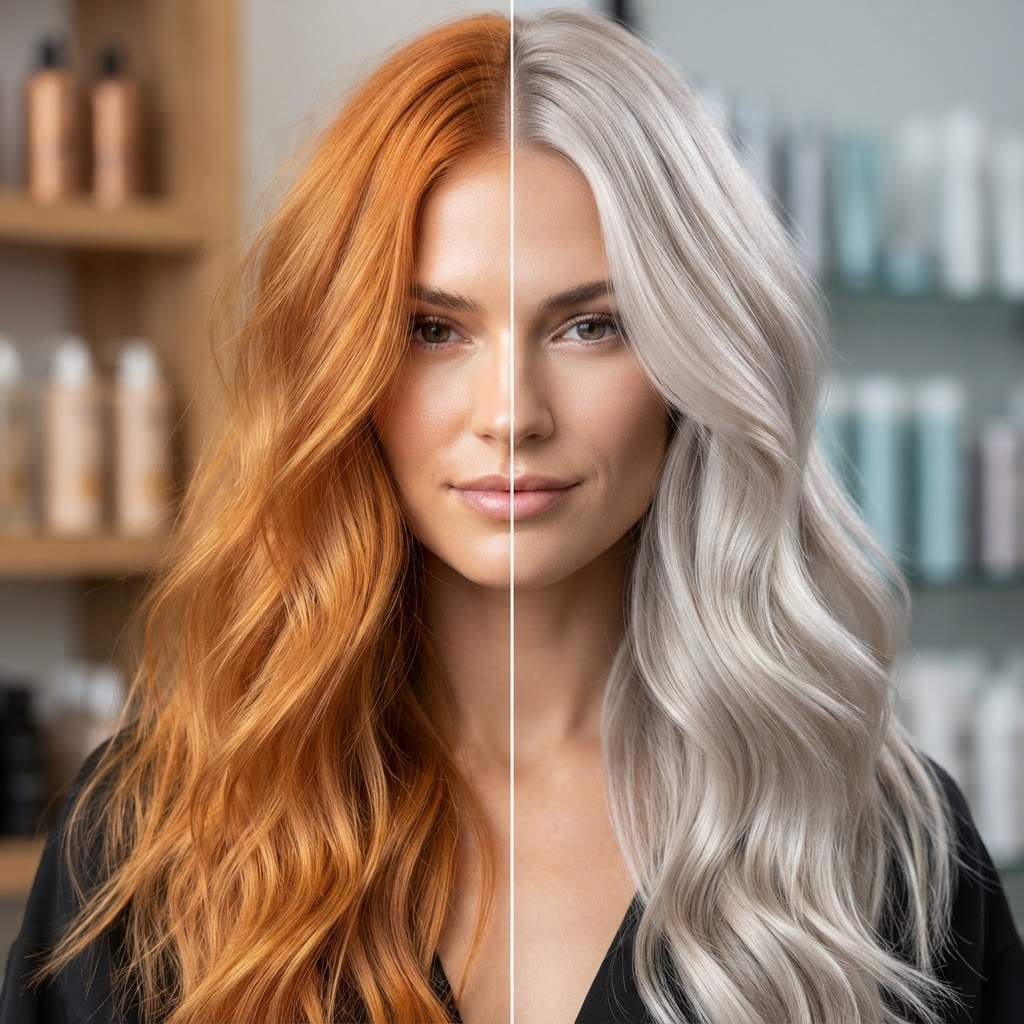
How to Fix Brassy Orange Hair with Toner: The Ultimate Guide
hair toner, brassy hair, orange hair, toning, hair colour correction
Discover how to fix brassy orange hair with toner at home. Our expert guide covers the best products, step-by-step tips, and aftercare for flawless hair.
If you have recently attempted to bleach your dark hair at home and ended up looking more like a copper penny than a cool blonde, do not panic. You are certainly not the first person to experience this, and you will not be the last. Learning how to fix brassy orange hair with toner is a rite of passage for anyone who colours their hair at home. Here at HairColourChart.online, we know that dealing with unexpected warmth can be incredibly frustrating, but with the right knowledge, products, and a little patience, you can achieve the beautiful, cool-toned shade you originally envisioned.
In this comprehensive guide, we will walk you through exactly why your hair turned orange, the science of colour correction, and the exact steps you need to take to neutralise those stubborn warm tones safely and effectively.
Why Does Hair Turn Orange?
To understand how to fix the problem, it helps to know why it happened in the first place. When you lighten your hair, the bleach has to eat through your natural pigment. Dark hair contains a complex mix of brown, black, and red pigments. According to experts, red pigments are typically the hardest for bleach to break down, which is why lightened brunette hair often reveals a brassy, orange-toned mane if the bleach is not left on long enough to lift these pigments fully, as noted in How To Fix Orange Hair After Bleaching.
Essentially, the orange you are seeing is your hair's natural underlying pigment exposed. Bleach alone does not deposit cool tones; it only strips away colour. To get a natural-looking blonde or light brown, you must follow up the bleaching process with a hair toner to deposit the correct complementary colours.
Colour Theory: Choosing the Right Hair Toner
The secret to fixing brassy hair lies in basic colour theory. To neutralise an unwanted colour, you must use its exact opposite on the colour wheel.
- For Yellow Hair: If your hair looks like the inside of a banana, you need a purple-based toner. Purple sits opposite yellow on the colour wheel.
- For Orange Hair: If your hair is distinctly orange or copper, purple will not work. You need a blue-based toner. Blue sits directly opposite orange on the colour wheel and will effectively cancel out the warmth.
As highlighted in How to get orange tone or brassy yellow out of your hair at home | Clairol GB, using complementary colours will cancel out unwanted warm tones. If you have dark hair and have attempted to go blonde (only to end up with orange hair), then a blue-based product is your best friend.
What You'll Need for Toning at Home
Before you begin the toning process, ensure you have the correct supplies. Being prepared will make the process smoother and yield professional-looking results.
- A Blue-Based Demi-Permanent Toner: Look for ash or cool-toned demi-permanent colours. Products like the L’Oréal Paris Feria Power Toner are excellent for at-home use, as mentioned in What Causes Brassy Orange Hair and How Do You Fix It?.
- Developer: You will need a low-volume developer, strictly 10 Volume (3%). A 10 Volume developer is designed to deposit colour without lifting the hair cuticle further, which is crucial for preventing additional damage to already bleached hair.
- Tinting Bowl and Brush: For precise, even application.
- Sectioning Clips: To ensure you do not miss any patches.
- Disposable Gloves: To protect your hands from staining.
- An Old T-shirt: To protect your clothing.
Step-by-Step: How to Fix Brassy Orange Hair
Follow these practical steps to neutralise your orange hair safely at home.
Step 1: The Crucial Strand Test
Never skip the strand test. Mix a tiny amount of your toner and developer and apply it to a hidden section of your orange hair. Leave it for the recommended time, rinse, and dry. This ensures the blue toner will actually neutralise the orange without turning your hair muddy or green.
Step 2: Prepare Your Hair
Toner applies best to damp, towel-dried hair. Wash your hair with a gentle shampoo to remove any bleach residue or styling products, but do not use conditioner just yet, as it can block the toner from penetrating the hair shaft. Towel dry until it is no longer dripping.
Step 3: Mix the Toner
Put on your gloves. In your tinting bowl, mix your chosen hair toner with the 10 Volume developer. The standard ratio is usually 1 part toner to 2 parts developer (1:2), but always read the manufacturer's instructions on your specific product.
Step 4: Apply Evenly
Divide your hair into four quadrants using your sectioning clips. Starting at the back (which is usually the darkest and most stubborn), use your tint brush to apply the toner from roots to ends. Work quickly but thoroughly, ensuring every orange strand is saturated.
Step 5: Process and Monitor
Leave the toner to process. Most demi-permanent toners take between 15 to 25 minutes. Keep a close eye on it; you can gently wipe away a small patch of toner with a damp cotton pad to check the colour progress. Once the orange has neutralised into a cool ash or beige, it is time to rinse.
Step 6: Rinse and Condition
Rinse your hair thoroughly with lukewarm water until the water runs clear. Follow up with a deep, hydrating conditioner or a hair mask to restore moisture to your freshly toned hair.
Aftercare: Keeping Brassy Hair at Bay
Toning is not a permanent fix; toners gradually wash out over 4 to 8 weeks. To maintain your cool-toned hair, you need a solid aftercare routine.
- Invest in Blue Shampoo: Swap your regular shampoo for a blue toning shampoo once a week. As noted in Fix and Prevent Brassy Hair — Hair Care Tips I John Frieda, if brassy orange tones are coming through in brunette hair, you can use a blue shampoo to crush those tones.
- Turn Down the Heat: Hot water and heated styling tools strip toner from the hair rapidly. Wash your hair in lukewarm water and always use a heat protectant spray before blow-drying or straightening.
- Limit Washing: Try to wash your hair only two to three times a week to prolong the life of your toner.
Common Mistakes to Avoid
- Using Purple Shampoo on Orange Hair: This is the most common mistake. Purple cancels yellow, not orange. If you put purple shampoo on bright orange hair, it will do absolutely nothing, or worse, make it look muddy.
- Using a High Volume Developer: Never use 20, 30, or 40 volume developer with a toner. High volumes will lift your natural base colour, exposing even more warmth and causing unnecessary damage.
- Leaving Toner on Too Long: Ash toners can grab onto porous, bleached hair very quickly. If left too long, your hair might temporarily take on a grey or blue tint.
FAQ
How long does hair toner last?
Demi-permanent toners typically last between 4 to 8 weeks, depending on how frequently you wash your hair and the porosity of your strands. Using colour-safe, sulphate-free shampoos will help it last longer.
Can I tone my hair immediately after bleaching?
Yes, in fact, it is the best time to do it. Bleaching opens the hair cuticle, making it highly receptive to the depositing pigments in a toner. Just ensure you have thoroughly washed all the bleach out first.
Will toner damage my hair?
When used correctly with a 10 Volume developer, demi-permanent toners are very gentle. They do not contain ammonia and do not lift the hair cuticle, meaning they deposit colour without causing structural damage. Many toners even contain conditioning agents that leave the hair feeling softer and shinier than before.