
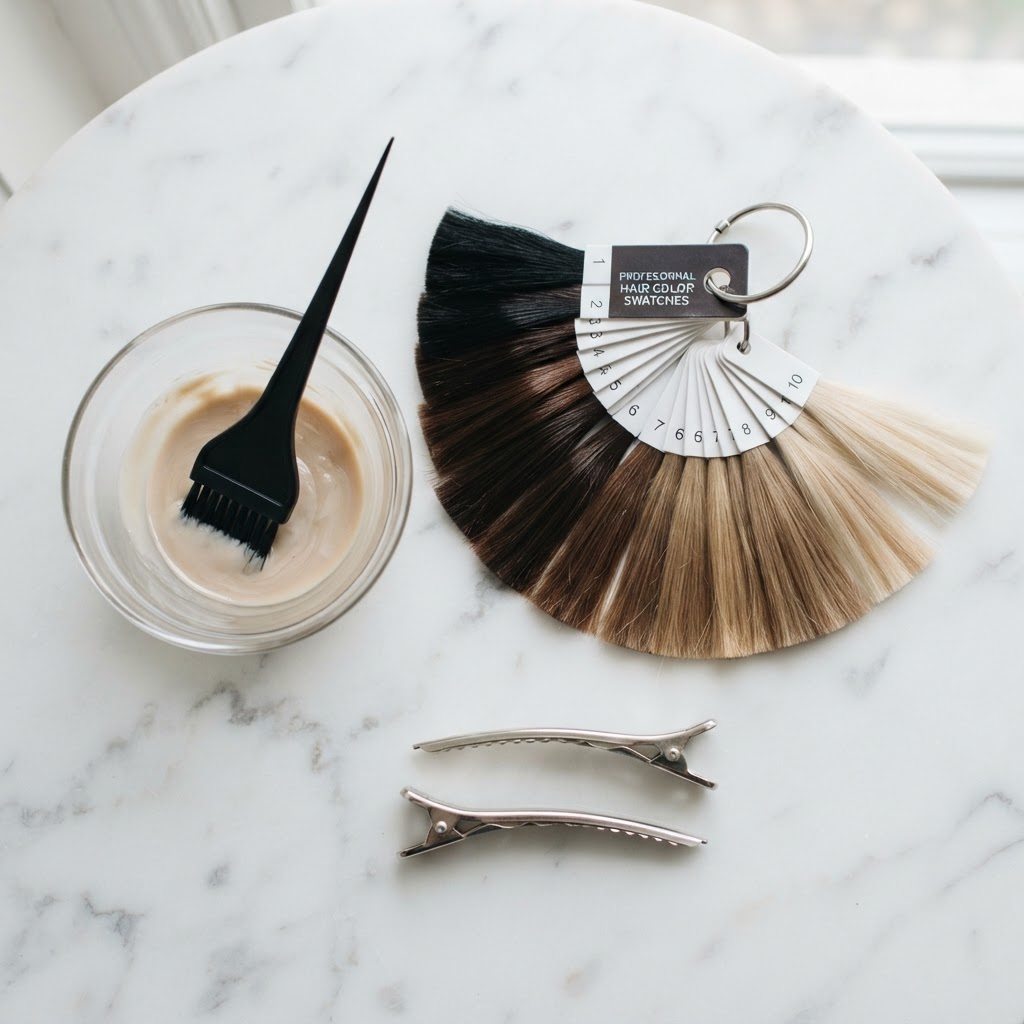
Hair Color Levels Explained: The 1 to 10 Depth Chart Guide
hair colour levels, depth chart, hair dye guide, at-home hair colour, hair level system
Master your at-home dye job with our guide to hair color levels. Discover how the 1 to 10 depth chart works to achieve your perfect shade every time.
If you have ever stared at a box of hair dye and wondered what the cryptic numbers mean, you are not alone. Understanding hair color levels is the ultimate secret to achieving salon-quality results at home. Whether you are aiming for a rich brunette or a cool ash blonde, knowing where your hair currently sits on the 1 to 10 depth chart is the first step to a flawless transformation.
In this comprehensive guide, we will break down exactly how the hair level system works, how to accurately determine your current shade depth, and the practical steps you need to take to formulate your perfect colour at home.
What is the Hair Level System?
The hair level system is a universal scale used by professional colourists and home dye brands alike to measure how light or dark a hair colour is. It focuses entirely on the lightness or darkness of the hair, completely independent of the tone (whether the hair is warm, cool, or neutral).
As explained by industry experts, the first number on a hair dye box indicates the depth level or base colour, ranging from 1 (black) to 10 (lightest blonde) Hair Color Charts Explained.
It is crucial to separate depth from tone. For example, a level 6 dark blonde can be warm (golden), cool (ash), or neutral, but its fundamental lightness remains a level 6. Confusing tone with depth is one of the most common mistakes home dyers make.
The 1 to 10 Depth Chart Breakdown
To help you visualise the scale, here is the standard 1 to 10 depth chart used across most professional and box dye brands:
- Level 1: Black
- Level 2: Darkest Brown
- Level 3: Dark Brown
- Level 4: Medium Brown
- Level 5: Light Brown
- Level 6: Dark Blonde
- Level 7: Medium Blonde
- Level 8: Light Blonde
- Level 9: Very Light Blonde
- Level 10: Lightest Blonde
Some professional high-lift ranges may go up to a Level 11 or 12, but for standard at-home colouring, 1 to 10 is your primary playground.
How to Find Your Current Shade Depth
Before you mix any chemicals, you need to know your starting point. Your current shade depth dictates what developer you will need and whether your desired result is achievable without bleach.
Step-by-Step: Reading Your Hair Level
- Find the right lighting: Always assess your hair in natural daylight. Avoid harsh bathroom bulbs or ring lights, which can make your hair appear warmer or lighter than it truly is.
- Check the nape of your neck: The hair at your crown and hairline is often lightened by the sun. For the most accurate reading of your natural depth, lift your hair and look at the roots at the nape of your neck Hair Color Levels 1-10 Chart For Colorists | Duomo Pro.
- Isolate a small section: Hold a small section of hair away from the rest of your head. Use a hand mirror if necessary to get a clear view.
- Ignore the greys: If you have grey hair, do not include it in your assessment of your natural pigmented level. Grey hair lacks melanin and will skew your perception of your true base colour.
Choosing the Right Developer Volume
Once you know your current level and your target level, you must choose the correct developer (hydrogen peroxide) to get you there. Developer opens the hair cuticle and allows the colour to penetrate.
- 10 Volume (3%): Best for depositing colour only. It will not lift (lighten) your hair. Use this if you are going darker or staying at the same level. Processing time is typically 20-30 minutes.
- 20 Volume (6%): The standard for grey coverage and lifting the hair by 1 to 2 levels. If you have resistant greys, 20 volume is usually your best bet, left on for 35-45 minutes depending on the brand's instructions.
- 30 Volume (9%): Lifts the hair by 2 to 3 levels. Ideal for significantly lightening virgin hair. Processing time is usually up to 45 minutes.
- 40 Volume (12%): Lifts up to 4 levels. This is very strong and generally not recommended for at-home use unless you are highly experienced, as it can cause severe damage and scalp irritation.
Safety Step: Always perform a patch test 48 hours before full application to check for allergies, and a strand test to ensure your chosen developer and colour combination yields the desired result.
Understanding Tones and Numbers
Now that you understand the depth chart, let's look at the numbers after the decimal point (or slash), which represent the tone.
For instance, in the shade 7.1, the '7' is the level (Medium Blonde), and the '.1' is the tone (Ash). Ash tones carry cool, blue or green-based pigments that help neutralise unwanted warmth, making them perfect for counteracting brassiness when lightening hair Hair Colour Numbering Explained: Levels & Tones (What .1 Ash Means).
Common tone numbers include:
- .0 or N: Natural
- .1 or A: Ash (Cool)
- .3 or G: Gold (Warm)
- .4 or C: Copper (Warm)
- .5 or M: Mahogany (Cool/Warm hybrid)
- .6 or R: Red (Warm)
Common Mistakes When Colouring at Home
Even armed with a depth chart, things can go wrong. Avoid these classic pitfalls:
- Trying to lift artificial colour with more colour: Colour cannot lift colour. If you have dyed your hair a level 4 dark brown, you cannot simply apply a level 7 blonde dye over it and expect it to lighten. You must use a colour remover or bleach first What Are Hair Levels? A Guide to Your Hair Depth and Tone.
- Misjudging grey percentage: Grey hair can visually dilute your overall colour, making your natural base look lighter than it is. Always formulate based on your darkest pigmented hair, then adjust your developer for grey coverage.
- Ignoring underlying pigment: When you lighten hair, you expose warm underlying pigments (red in dark hair, orange in brown hair, yellow in blonde hair). If you are lifting your hair, you must choose a shade with a cool tone (like ash or iridescent) to neutralise this warmth.
Aftercare for Your New Shade
Maintaining your perfect level requires a solid aftercare routine:
- Use colour-safe shampoo: Sulphate-free formulas prevent the colour molecules from being stripped away prematurely.
- Tone regularly: If you have lightened your hair, use a purple shampoo (for blondes) or blue shampoo (for brunettes) once a week to keep brassy tones at bay.
- Deep condition: Chemical processes alter the hair's porosity. Use a hydrating mask weekly to keep the cuticle smooth and the colour locked in.
FAQ
What does a 6.3 hair colour mean?
Using the hair level system, the '6' indicates a Dark Blonde depth, and the '.3' indicates a Golden tone. Therefore, 6.3 is a warm, golden dark blonde.
Can I go from a level 3 to a level 8 at home?
Lifting hair from a level 3 (Dark Brown) to a level 8 (Light Blonde) requires lifting 5 levels. This cannot be done with standard box dye and developer alone; it requires bleaching and subsequent toning. This is a complex process best left to professionals, or done at home with extreme caution and high-quality lighteners.
Why did my level 5 ash brown turn out black?
If your hair was previously damaged or highly porous, it can absorb colour too quickly, resulting in a darker shade than intended. Additionally, ash tones absorb light, making them appear visually darker than warm tones at the exact same level. Next time, try a level 6 or reduce your processing time slightly on the porous ends.