
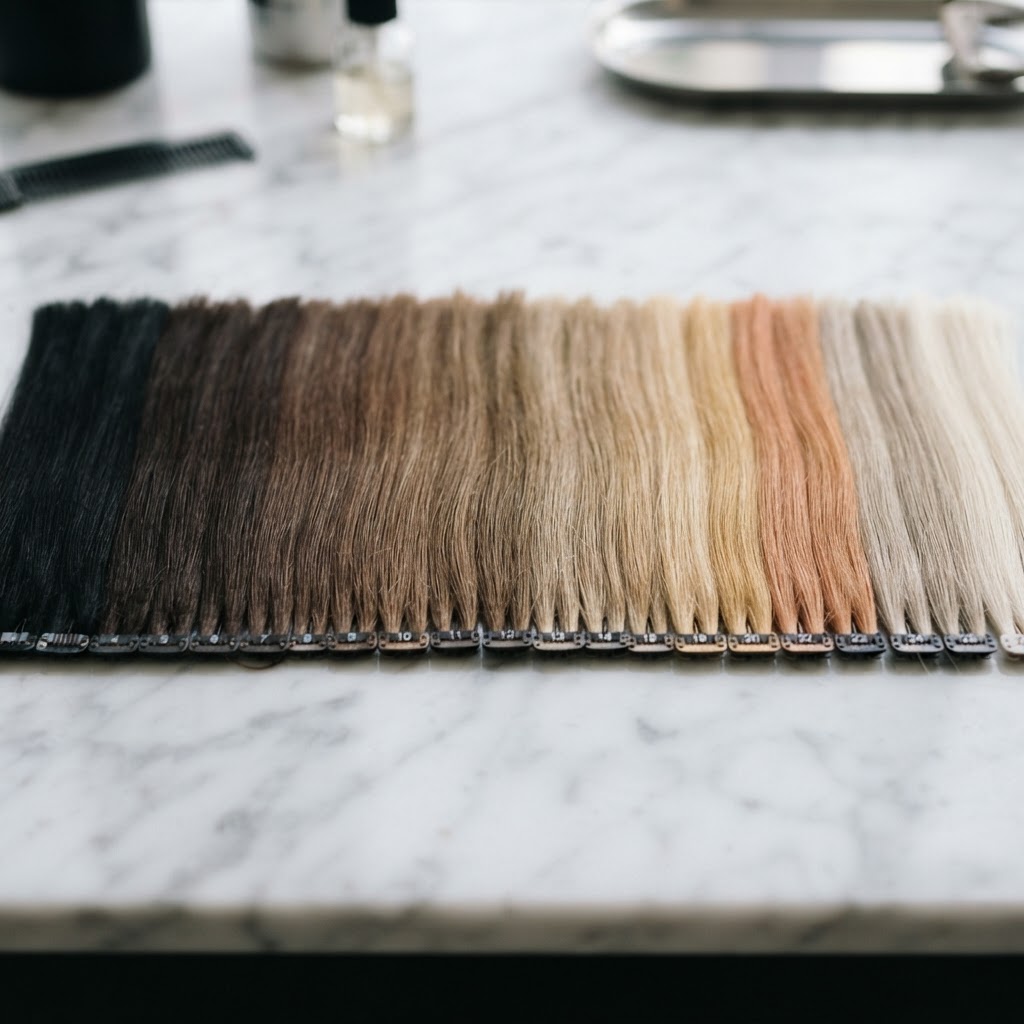
Hair Color Levels Explained: The 1 to 10 Depth Chart
hair colour, at-home dyeing, hair levels, developer guide, hair depth chart
Master your at-home dye job with our guide to hair color levels. Discover how the 1 to 10 depth chart works to achieve your perfect shade safely.
Welcome to HairColourChart.online! If you have ever stared at a box of hair dye and wondered what the numbers actually mean, you are not alone. Understanding hair color levels is the ultimate secret to achieving salon-quality results in your own bathroom. Whether you are looking to cover stubborn greys or safely lift your base, mastering the 1 to 10 depth chart is your first step to a flawless, predictable colour transformation.
Understanding the Hair Level System: The 1 to 10 Depth Chart
In professional hairdressing, the hair level system is a universal scale used to measure how light or dark your hair is. It focuses entirely on lightness and darkness, completely ignoring the actual hue or tone (like red, ash, or gold).
According to Hair Color Chart: Understanding Color Numbering | Luc Vincent, the standard scale runs from 1 to 10:
- Level 1: Black
- Level 2: Very Dark Brown
- Level 3: Dark Brown
- Level 4: Medium Brown
- Level 5: Light Brown
- Level 6: Dark Blonde
- Level 7: Medium Blonde
- Level 8: Light Blonde
- Level 9: Very Light Blonde
- Level 10: Extra Light Blonde (Platinum)
When you look at a professional dye or a high-quality box dye, the first number you see indicates this shade depth. For example, a '6.1' or '6A' means the base is a Level 6 (Dark Blonde), while the number or letter following it represents the tone (in this case, Ash).
How to Find Your Natural Shade Depth
Before you can choose your new colour, you must accurately identify your starting point.
- Find natural light: Always assess your hair in natural daylight. Bathroom bulbs can cast warm or cool shadows that distort your true depth.
- Check the nape of your neck: The hair at your crown and hairline is often lightened by the sun. For the most accurate reading, look at the roots near the nape of your neck, as recommended by Hair Color Levels 1-10 Chart For Colorists | Duomo Pro.
- Isolate a section: Pull a small section of hair away from the rest of your head to view it clearly without shadows.
- Ignore the greys: If you have grey hair, try to look only at the pigmented strands to determine your natural base level.
What You'll Need for a Successful Colour Match
To safely colour your hair at home using the depth chart, gather these essential tools:
- A handheld mirror (to check the back of your head).
- Sectioning clips to separate the hair cleanly.
- A physical or digital hair colour shade chart for reference.
- A non-metallic mixing bowl and tint brush.
- The correct developer volume (more on this below).
Step-by-Step: Choosing Your Developer and Dye
Once you know your current level and your target level, you can formulate your mix.
- Determine the difference: Count how many levels you need to move. If you are a Level 5 and want to be a Level 7, you need 2 levels of lift.
- Choose your developer:
- 10 Volume (3%): Best for depositing colour, going darker, or staying at the same level. It provides zero lift.
- 20 Volume (6%): The standard for grey coverage and lifting the hair 1 to 2 levels.
- 30 Volume (9%): Used for lifting 2 to 3 levels. Use with caution at home.
- Perform a patch test: Always test the dye on a small patch of skin 48 hours before full application to check for allergies.
- Apply carefully: Apply to the mid-lengths and ends first if you are lifting, as the heat from your scalp will cause the roots to process faster (a phenomenon known as 'hot roots').
Common Mistakes When Reading Hair Colour Levels
Even enthusiastic home-dyers can make missteps. Here are the most common pitfalls to avoid:
- Confusing tone with depth: A warm, brassy Level 6 might look lighter to the naked eye than a cool, ashy Level 6, but their shade depth is exactly the same. Do not let warmth trick you into thinking your hair is lighter than it is.
- Ignoring previous colour: Colour cannot lift colour. If you have previously dyed your hair to a Level 4, you cannot simply apply a Level 7 dye over it and expect it to lighten. You would need a colour remover or bleach first, as noted by Understanding The Level System In Hair Color – Laura K Collins.
- Misjudging grey percentage: Grey hair lacks melanin and can make your overall base look lighter. Always formulate based on your darkest pigmented hair, then adjust your developer for resistant greys.
Aftercare for Your New Shade
Maintaining your perfect level requires a solid aftercare routine:
- Use colour-safe shampoo: Sulphate-free formulas prevent your new depth from fading prematurely.
- Neutralise unwanted tones: If you lifted your hair to a Level 8 or above, use a purple shampoo once a week to counteract brassy yellow tones.
- Deep condition: Chemical processing alters the hair cuticle. Use a hydrating mask weekly to keep the hair shaft smooth and reflective.
FAQ
What is the difference between hair colour level and tone?
The level measures how light or dark the hair is on a scale of 1 to 10. The tone refers to the visible colour hue, such as ash, gold, copper, or red. You can have a Level 7 Ash and a Level 7 Gold; they share the same depth but have completely different reflects.
How do I know my natural hair level if I've coloured my hair before?
Look closely at your new root growth, preferably at the back of your head where the hair is least affected by environmental factors like sun exposure.
Can I jump from a Level 2 to a Level 9 at home?
Drastic changes (lifting more than 3 levels) require bleach and careful toning. It is highly recommended to see a professional for massive transformations to avoid severe damage and unpredictable, brassy results.