
Hair Bleaching for Beginners: Safety, Timing, and Common Mistakes
hair bleaching, DIY hair colour, hair care, bleach at home, developer guide
Master hair bleaching for beginners with our expert guide. Learn how to safely bleach at home, choose the right developer, and avoid common mistakes.
Welcome to HairColourChart.online! If you are considering a major colour transformation, you are in exactly the right place. Tackling hair bleaching for beginners can feel a bit daunting, but with the right preparation and knowledge, you can safely achieve that dreamy blonde or prep your canvas for vivid colours. Let's break down everything you need to know to bleach at home safely, effectively, and without compromising the health of your hair.
Understanding the Science: How Lightening Hair Works
Before you mix any chemicals, it helps to understand what is actually happening to your strands. Human hair contains two types of melanin: eumelanin (responsible for black and brown tones) and pheomelanin (responsible for red hues). When you apply bleach, the alkaline agent opens the hair cuticle, allowing the oxidising agent to enter and dissolve these melanin pigments, effectively lightening hair. As noted in What to Know About Hair Bleach, this process strips the protective fibres and oils from the hair, which is why proper technique and aftercare are absolutely vital.
As you lift dark hair, it will naturally expose warm undertones—shifting from red to orange, and finally to yellow—before reaching a pale blonde. Understanding this journey is crucial so you don't panic when your hair turns brassy halfway through the process!
What You'll Need for Your DIY Bleach Kit
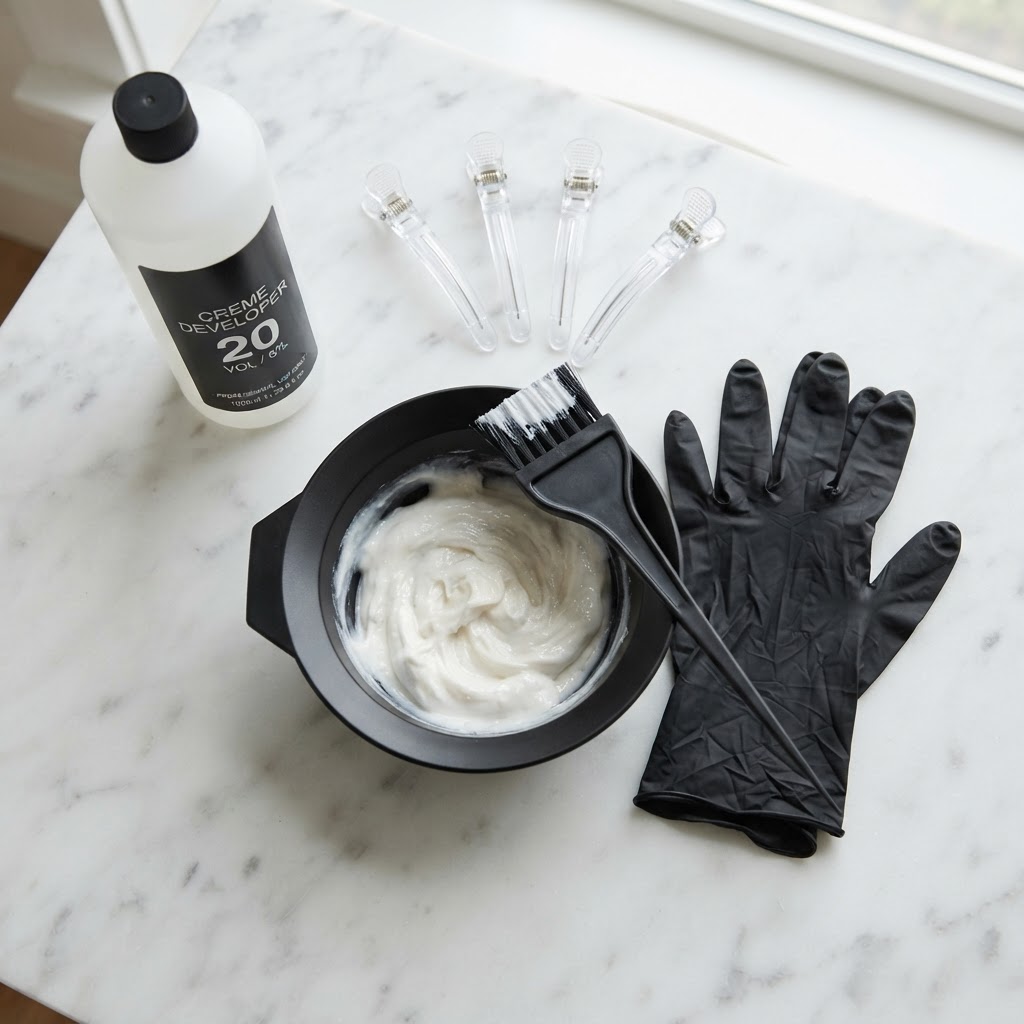
Preparation is the secret to a flawless finish. Gather all your tools before you even think about putting on your gloves. You will need:
- Hair Bleach: A high-quality powder or cream lightener.
- Developer: The hydrogen peroxide liquid that activates the bleach.
- Non-metallic mixing bowl and tint brush.
- Sectioning clips: Plastic is best.
- An old t-shirt and a towel you don't mind ruining.
- Disposable gloves.
- Colour-safe shampoo and a deep conditioner or bond builder.
Choosing the Right Developer
A developer is what activates your bleach, and it comes in different "volumes" indicating its lifting power. For at-home applications, experts strongly advise against reaching for the strongest option. According to How to Bleach Hair at Home without Damage, using a 20-volume developer is the safest and most effective way to maintain hair elasticity. While a 30-volume developer can be used on very dark, healthy virgin hair, 40-volume should be strictly left to salon professionals due to the high risk of severe damage and scalp burns.
Essential Safety Steps Before You Begin
1. The 72-Hour Rule
Do not wash your hair immediately before bleaching. It is highly recommended to wait at least 72 hours after your last wash, as your scalp's natural oils act as a protective barrier against the harsh chemicals, reducing the risk of irritation. This tip is echoed in the Guide to Bleaching | How to Bleach your Hair at Home.
2. Patch and Strand Tests
Skipping these tests is one of the biggest mistakes you can make. A patch test (applying a tiny amount of bleach behind your ear) ensures you don't have a severe allergic reaction. A strand test (applying bleach to a hidden section of hair at the nape of your neck) tells you exactly how your hair will react, how long it will take to lift, and whether your hair is healthy enough to withstand the process. As highlighted in Avoiding Common Mistakes Stylists Make With Hair Bleaching, failing to test can lead to brittle, burned hair.
Step-by-Step: How to Bleach at Home
Once you have completed your tests and gathered your supplies, it is time to begin.
- Section your hair: Divide your dry, unwashed hair into four neat quadrants (two in the front, two in the back). Secure them with plastic clips. This ensures an even application and prevents you from rushing.
- Mix your bleach: Wearing gloves, mix your bleach powder and developer in your non-metallic bowl according to the manufacturer's exact ratios.
- Apply to mid-lengths and ends first: Start at the back of your head where the hair is thickest. Apply the bleach mixture starting about an inch away from your scalp, working down to the ends.
- Apply to the roots last: The heat from your scalp causes bleach to process much faster. To avoid "hot roots" (where your roots are significantly lighter than the rest of your hair), wait about 20 minutes before applying the bleach to your root area, as advised in Bleaching Hair at Home: A Step-By-Step, Damage-Free Guide.
- Set your timer: Cover your hair with a shower cap and let it process. Never leave bleach on for more than 30 to 45 minutes total.
- Rinse thoroughly: Rinse with lukewarm water. It is crucial to shampoo twice to ensure absolutely no chemical residue is left behind, which could continue to process and cause scalp burns, a precaution noted in How to Bleach Your Hair At Home Without Damaging It.
Common Mistakes to Avoid
Even with the best intentions, DIY bleaching can go wrong if you aren't careful. Watch out for these frequent pitfalls:
- Overlapping bleach: Only apply bleach to virgin hair (new growth). Applying bleach over previously lightened hair can cause it to become gummy, mushy, and eventually snap off.
- Rushing the process: Trying to go from dark brown to platinum blonde in a single day is a recipe for disaster. Lightening hair safely often requires multiple sessions spaced at least 14 days apart.
- Using too much heat: Never use a hairdryer to speed up the bleaching process at home. This can cause the bleach to dry out, swell, and severely damage the hair cuticle.
Aftercare for Bleached Hair
Bleached hair is highly porous and fragile. To restore its health, incorporate bond-building treatments containing ingredients like bis-aminopropyl diglycol dimaleate and ceramides into your routine. Swap your regular conditioner for a deep hydration mask, and always use a heat protectant before styling.
FAQ
How long should I leave bleach in my hair?
Never exceed 45 minutes. Your strand test will give you the exact timing needed for your specific hair type, but leaving bleach on longer than 45 minutes will not make it lighter; it will only cause structural damage.
What is a bleach bath?
A bleach bath (or bleach wash) is a gentler method where bleach is mixed with shampoo. It is ideal for removing old semi-permanent colour or achieving a very subtle 1-2 levels of lift without the harshness of a full bleach application.
Why did my hair turn orange?
Dark hair naturally contains red and orange underlying pigments. When you bleach it, these pigments are exposed. If your hair turns orange, it means it hasn't lifted enough yet. You may need a second bleaching session (after waiting a few weeks) or a blue-based toner to neutralise the brassiness.