
Choosing the Right Hair Dye Brand for Your Hair Type: A Complete Guide
hair dye brands, hair type, permanent vs semi, at-home hair colour, hair care
Discover the secret to flawless at-home colour by choosing the right hair dye brand for your hair type. Learn about permanent vs semi, developers, and more!
Welcome to your ultimate guide to achieving salon-worthy colour from the comfort of your own bathroom. If you have ever stood in the beauty aisle feeling overwhelmed by the sheer number of boxes, you are not alone. Choosing the right hair dye brand for your hair type is the single most important step in your at-home colouring journey. Whether you are looking to cover stubborn greys, add a glossy shine, or completely transform your look, understanding your hair's unique needs will ensure you get beautiful, healthy results every time.
Understanding Your Hair Type and Condition
Before you even look at a colour chart, you need to assess what you are working with. Your hair type isn't just about whether it is straight or curly; it is about porosity, thickness, and current health.
- Fine Hair: Processes colour very quickly and is prone to damage. You will want gentle, conditioning formulas.
- Coarse or Thick Hair: Takes longer to absorb colour and often requires more product and slightly longer processing times.
- Porous or Damaged Hair: Sucks up colour rapidly but fades just as fast. If your hair is bleached or heat-damaged, you need to be incredibly careful with developers.
Permanent vs Semi: Which Formula is Right for You?
One of the biggest decisions when choosing dye is deciding between permanent vs semi-permanent formulas.
According to experts at Hair.com, semi-permanent colour acts as a gentle stain that sits on the surface of the hair cuticle. It is a fantastic, low-commitment option that typically fades within 4 to 12 washes. Because it does not contain ammonia, it causes zero damage, making it perfect for refreshing faded ends or trying a fun new hue.
On the other hand, permanent hair dye uses ammonia (or an ammonia substitute) and a developer to open the hair cuticle and deposit colour deep within the cortex. This means the colour grows out rather than washing out, making it the best choice for significant lightening or 100% grey coverage. If you are somewhere in the middle, a demi-permanent dye uses a low-volume developer to deposit colour that lasts longer than a semi but shorter than a permanent, as noted by Pak Cosmetics.
Choosing Dye: Top Hair Dye Brands for Every Need
Not all box dyes are created equal. Here is a breakdown of some of the best hair dye brands tailored to specific hair types and goals:
- Best for Stubborn Greys: If you need full coverage, L'Oreal Paris Excellence Crème is a reliable permanent option that offers triple protection and 100% grey coverage.
- Best for Damaged Hair: Look for plex-enriched formulas. Smart Beauty offers vegan, cruelty-free kits made in the UK that include bond-strengthening ingredients to protect your strands while colouring.
- Best for a Glossy Refresh: If you just want to add shine and tone, the Josh Wood Colour Semi-Permanent Gloss is packed with Shea Butter and Perilla Oil to deeply condition while it colours.
- Best for Vivid Fashion Colours: For bright pinks, blues, and coppers, Good Dye Young offers highly pigmented, semi-permanent direct dyes that are vibrant and conditioning.
What You'll Need for At-Home Dyeing
Preparation is key to avoiding a patchy disaster. Gather these essentials before you mix your colour:
- The Right Developer: If you are using professional tubes rather than a box kit, you must choose your developer carefully. Use 10-volume for depositing colour or going darker, 20-volume for 1-2 levels of lift and grey coverage, and 30-volume for 2-3 levels of lift. Never use 40-volume at home unless you are a trained professional.
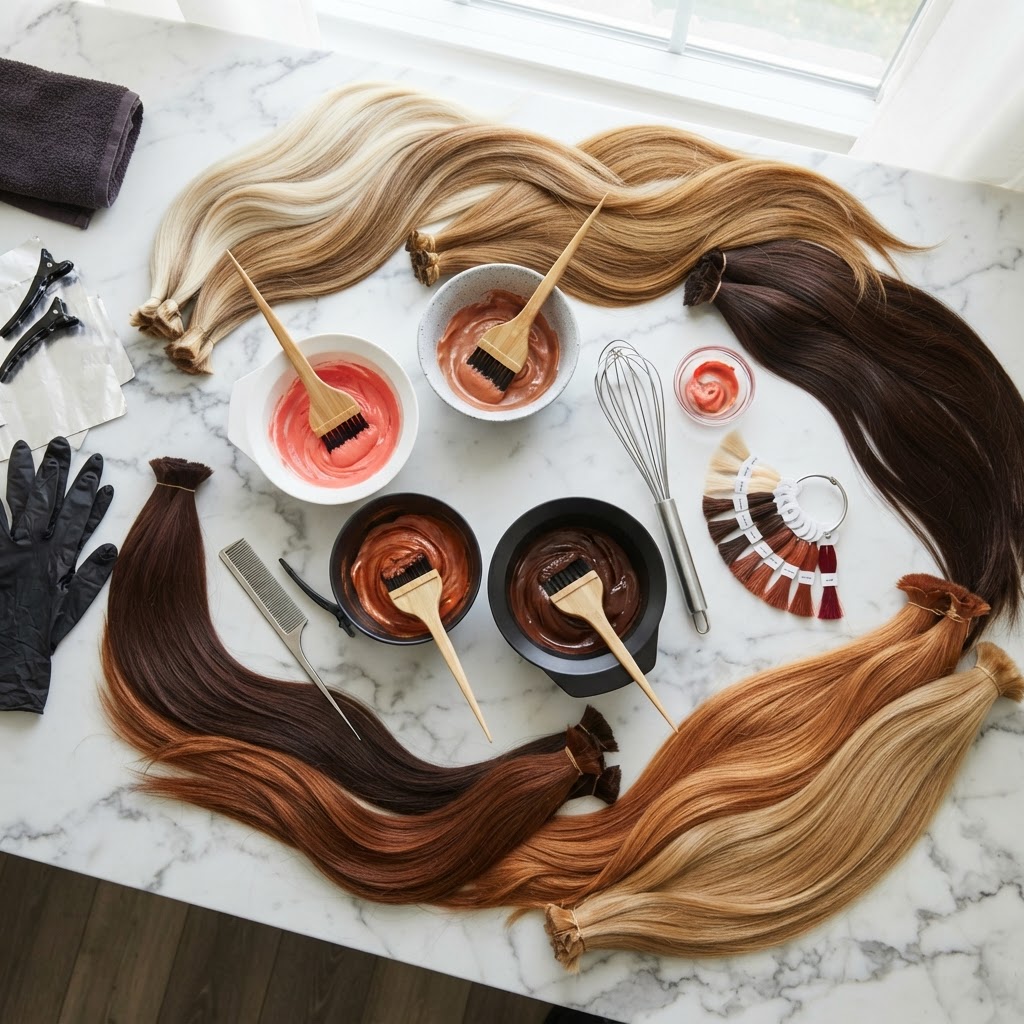
- Tools: A non-metallic mixing bowl, a tint brush for precise application, sectioning clips, and high-quality gloves.
- Protection: Barrier cream (or petroleum jelly) for your hairline, and an old towel or cape.
Step-by-Step: How to Apply Your Chosen Colour
Follow these steps for a flawless application:
- The Patch Test: Always perform an allergy alert test 48 hours before colouring, even if you have used the brand before.
- Prep the Hair: If using a permanent dye, apply to dry, unwashed hair (the natural oils protect your scalp). If using a semi-permanent direct dye, apply to clean, damp hair.
- Sectioning: Divide your hair into four neat quadrants (down the middle, and from ear to ear).
- Application: Start at the roots if you are covering greys or regrowth. Use your tint brush to apply the colour in fine, 1/4-inch sections.
- Timing: Set a timer according to the manufacturer's instructions. Permanent dyes usually need 30-45 minutes. Semi-permanents like Clairol Color Gloss Up can develop in as little as 15 minutes.
- Rinsing: Emulsify the colour with a little warm water, then rinse until the water runs clear. Follow with a colour-safe conditioner.
Essential Aftercare for Long-Lasting Colour
Your colour is only as good as your aftercare routine. To prevent premature fading:
- Wait at least 72 hours before your first shampoo to allow the cuticle to fully close.
- Switch to a sulphate-free, colour-safe shampoo and conditioner.
- Wash your hair in cool or lukewarm water; hot water strips colour rapidly.
- Use a toning shampoo (like purple shampoo for blondes or blue shampoo for brunettes) once a week to neutralise unwanted brassy tones.
Common Mistakes to Avoid
- Over-processing the ends: If you are touching up your roots with permanent dye, do not pull the colour through to the ends for the full processing time. This causes severe damage and "colour build-up," making ends look overly dark and muddy. Instead, use a semi-permanent gloss on the mid-lengths and ends for the last 10 minutes.
- Ignoring your starting level: Box dye cannot lighten previously dyed dark hair. Colour does not lift colour. If you have dyed black hair and want to go brown, you need a colour remover first.
FAQ
Can I use semi-permanent dye to cover my grey hair? Semi-permanent dyes will not provide 100% opaque coverage for greys. However, as noted by Clairol, they are excellent for softly blending greys if you have less than 25% grey hair, giving a natural, highlighted effect.
How do I know if my hair is too damaged to dye? If your hair feels gummy or stretchy when wet, or snaps easily when brushed, it is too compromised for permanent dye or bleach. Stick to conditioning semi-permanent direct dyes until your hair's health improves.
Should I wash my hair before dyeing it? For permanent colour, no. The natural sebum protects your scalp from irritation. For semi-permanent direct dyes (which contain no developer), yes—apply to clean, damp hair free of styling products so the colour can properly stain the cuticle.
Sources
- Permanent Hair Dye vs Semi: Which One Should You Pick?
- Semi Permanent Hair Dye | Washout Hair Color for Low Commi
- What Type of Hair Dye Is Best for You?
- Cruelty-Free Permanent Hair Dye UK: Top 5 Brands
- Semi-Permanent Hair Dye by Josh Wood Hair Colour Expert
- Good Dye Young - Ex-Girl Semi-Permanent Hair Dye | Ulta Beauty
- Using Semi-Permanent Hair Dye for Gray Hair | Clairol US