
Choosing the Right Hair Dye Brand for Your Hair Type
hair dye, hair type, home hair colour, permanent hair dye, semi-permanent hair dye, hair care
Discover how to choose the right hair dye brand for your hair type. Learn the differences between permanent vs semi-permanent dyes for perfect home results.
Choosing the right hair dye brand for your hair type can feel overwhelming when you're standing in the beauty aisle or browsing online. Whether you're looking to cover greys, add a vibrant pop of colour, or simply refresh your natural shade, understanding your hair type and the different dye formulas is crucial for achieving salon-worthy results at home.
Understanding Hair Dye Types: Permanent vs Semi
Before selecting a brand, it's essential to understand the difference between permanent and semi-permanent dyes.
- Permanent Hair Dye: This formula opens the hair cuticle to deposit colour deep within the hair shaft. It's the best choice for 100% grey coverage, lightening your hair (when mixed with a developer), or making a significant colour change. Permanent dyes last until the hair grows out, though the colour may fade over time.
- Demi-Permanent Hair Dye: This type mixes with a low-volume developer to deposit colour without fully opening the cuticle. It's great for blending greys, enhancing your natural colour, or adding shine. It typically lasts up to 24-28 washes.
- Semi-Permanent Hair Dye: Semi-permanent dyes coat the outside of the hair shaft without using a developer or ammonia. They are gentle, wash out gradually (usually within 4-12 washes), and are perfect for trying out vivid fashion colours or refreshing faded ends.
Matching Hair Dye Brands to Your Hair Type
Different hair types have different needs. Here is a guide to choosing the right hair dye brand for your hair type.
Best for Dry or Damaged Hair
If your hair is prone to dryness or has been previously bleached, you need a gentle formula that won't cause further damage.
- Smart Beauty: This UK-made brand offers cruelty-free permanent hair dye with built-in "plex" technology. Plex formulas help protect and rebuild hair bonds during the colouring process, leaving hair glossy and soft rather than brittle [3].
- Semi-Permanent Options: Brands like Crazy Color, La Riche Directions, and Bleach London offer conditioning semi-permanent dyes that deposit colour without harsh chemicals [1, 2].
Best for Thick or Coarse Hair
Thick hair often requires more product and a formula that can penetrate coarse strands effectively.
- L'Oréal Paris: Known for its wide range of accessible home hair dyes, L'Oréal offers permanent cream formulas that provide excellent coverage for thick hair [4]. Remember to buy two boxes if your hair is long or very thick to ensure even application [5].
Best for Grey Coverage
Grey hair can be stubborn and resistant to colour. Permanent dye is usually the best route for full coverage.
- Josh Wood Colour: Founded by a celebrity colourist, this brand brings salon-quality permanent dye to your home. It offers multi-dimensional colour, impressive fade resistance, and 100% grey coverage [3, 4].
- Oiamiga: For a vegan-friendly option, Oiamiga offers permanent formulas that deliver 100% grey coverage with reduced chemical content [3].
What You'll Need for Home Dyeing
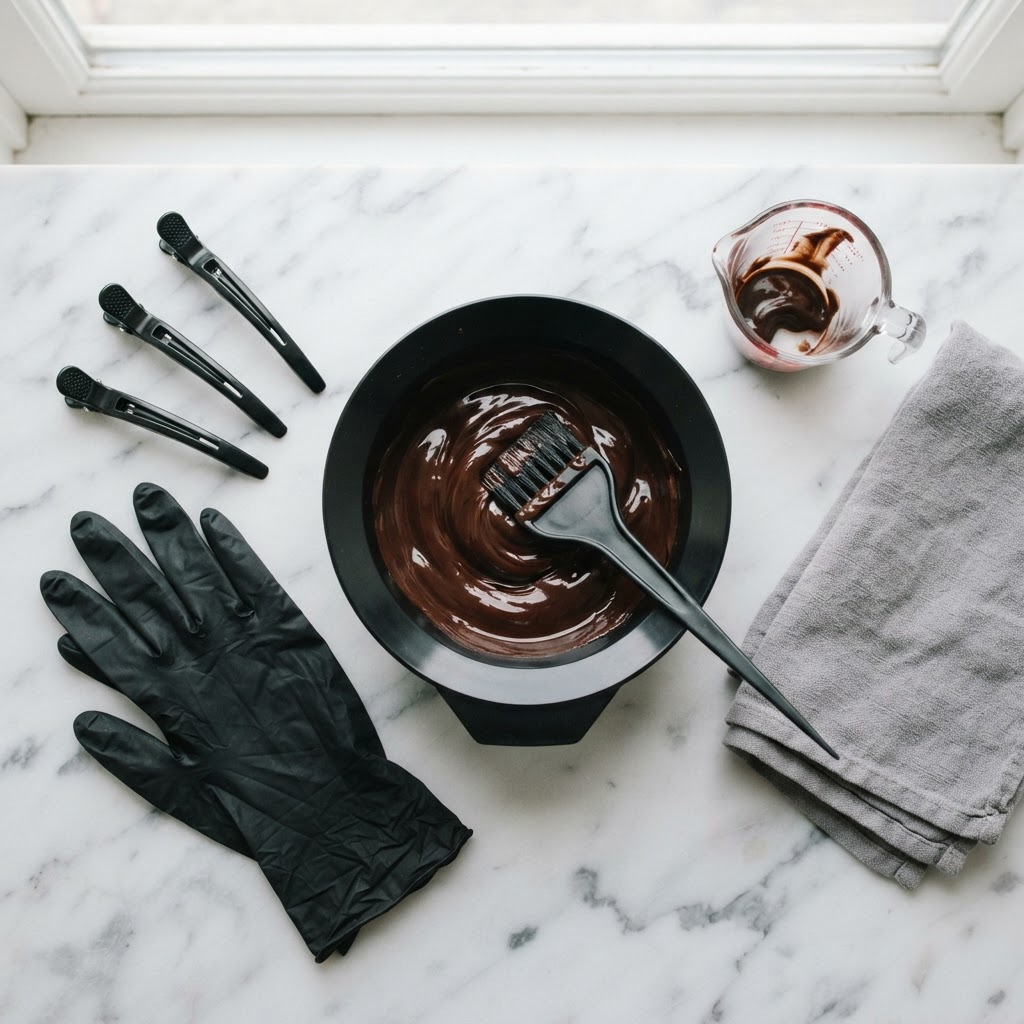
Preparation is key to a successful home dye job. Gather these supplies before you begin:
- Your chosen hair dye (buy two boxes for long/thick hair)
- An old t-shirt or hairdressing cape
- Barrier cream (like petroleum jelly) to protect your hairline and ears
- Non-metallic mixing bowl and tint brush (if not using a bottle applicator)
- Sectioning clips
- Gloves (usually included in the box, but having spares is handy)
- A timer
Step-by-Step: How to Dye Your Hair at Home
- Do a Patch Test: Always perform an allergy alert test 48 hours before colouring, even if you've used the brand before [5].
- Do a Strand Test: Apply dye to a small, hidden section of hair to check the colour result and processing time [5].
- Prep Your Hair: Brush your hair thoroughly and divide it into four sections using clips.
- Protect Your Skin: Apply barrier cream along your hairline and ears [6].
- Mix the Colour: Put on your gloves and mix the colourant and developer according to the manufacturer's instructions [6].
- Apply the Dye: Start at the roots, working section by section. If you're doing a root touch-up, only apply dye to the new growth [6].
- Process: Set your timer for the recommended duration. Do not leave the dye on longer than instructed, as this won't improve the colour and may cause damage [5].
- Rinse and Condition: Rinse your hair until the water runs clear, then apply the conditioner provided in the kit.
Aftercare for Coloured Hair
To keep your new colour looking vibrant:
- Use a colour-safe, sulphate-free shampoo and conditioner.
- Wash your hair less frequently and use cool or lukewarm water.
- Protect your hair from heat styling and UV rays.
- Use a weekly deep conditioning mask to maintain moisture [5].
Common Mistakes to Avoid
- Skipping the patch test: Allergic reactions can happen at any time [5].
- Choosing a shade too far from your natural colour: For home dyeing, stick to going one or two shades lighter or darker. Major changes are best left to professionals [5].
- Not buying enough dye: Running out of dye halfway through will result in patchy colour [5].
FAQ
Can hair dye cause allergies? Yes, hair dye can cause allergic reactions, which is why a patch test is essential before every application [5].
What developer volume should I use? Most box dyes come with a pre-mixed developer (usually 20 volume for standard permanent colour and grey coverage). If buying professional tubes, 10 volume is for depositing colour, 20 volume is for 1-2 levels of lift and grey coverage, and 30 volume is for 2-3 levels of lift.
Is salon dye better than box dye? Salon dye allows for custom mixing and professional application, which is ideal for complex changes, bleaching, or colour correction. However, high-quality box dyes like Josh Wood Colour or Smart Beauty can provide excellent results for simple changes and root touch-ups [3, 4, 5].
Sources
- hair dye suggestions UK : r/HairDye
- Demi & Semi Permanent Hair Dye - Sally Beauty
- Cruelty-Free Permanent Hair Dye UK: Top 5 Brands
- Best hair dye: The best home hair dye and root touch up - Mamabella
- What Type of Hair Dye Is Best for Each Hair Type? Simple Hair Colour Guide
- Semi-Permanent vs Permanent vs Demi-Permanent Hair Color - Key Differences