
Bleaching dark hair to blonde: a step-by-step guide
hair bleaching, dark to blonde, hair lightening, bleach bath, at-home hair dye, hair care
Looking to transform your locks? Discover our expert tips on bleaching dark hair to blonde: a step-by-step guide for safe, stunning at-home results.
Welcome to HairColourChart.online! If you are dreaming of a platinum transformation, you have come to the right place. Bleaching dark hair to blonde: a step-by-step guide is exactly what you need to navigate this tricky process safely. Going from brunette to blonde is a major chemical process, but with the right knowledge, patience, and preparation, you can achieve salon-worthy results in your own bathroom.
Understanding the Lightening Process
Before you mix any chemicals, it is crucial to understand how hair bleaching works. Bleach strips the natural pigment from your hair shaft through an oxidation process. When taking hair from dark to blonde, you are forcing your hair through several stages of lightening—from brown to red, then orange, yellow, and finally pale yellow.
If your hair is naturally very dark (levels 1-4), you will likely need a stronger developer, such as a 30-volume cream developer, to lift the pigment effectively. However, as noted in How to Bleach Hair: The Complete Guide, coarser hair may struggle with lightening, while porous hair absorbs bleach much quicker. It is always better to do two gentle rounds of bleaching rather than one aggressive round that compromises your hair health.
What You'll Need
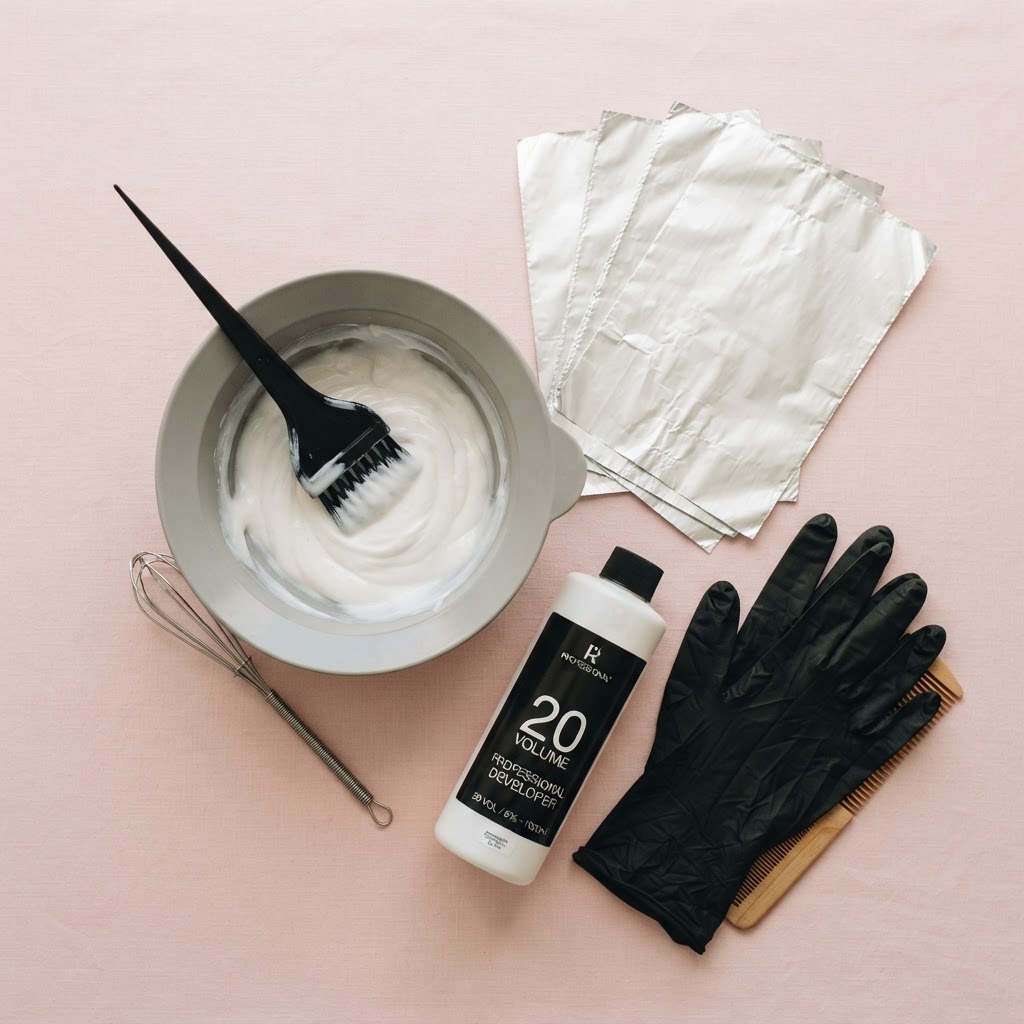
Preparation is everything. Do not start the process until you have all your supplies ready. According to How to Bleach Hair at Home? | Home Hair Colour, at-home bleaching often requires more than just a single box kit. Here is your professional toolkit:
- Bleach Powder: A high-quality blue or purple-based bleach powder to help counteract warmth.
- Cream Developer: 20-volume for light brown hair, or 30-volume for dark brown/black hair. Never use 40-volume on your scalp.
- Toner: An ash or pearl toner to neutralise brassy orange and yellow tones.
- Tools: A non-metallic mixing bowl, a tint brush, and sectioning clips.
- Safety Gear: Latex or nitrile gloves and an old t-shirt.
- Aftercare: A deep conditioning mask and purple shampoo.
Bleaching Dark Hair to Blonde: A Step-by-Step Guide
Step 1: Prep and Strand Test
Do not wash your hair for at least 48 hours before bleaching. Your scalp's natural oils will act as a protective barrier against the harsh chemicals. Always perform a strand test on a hidden section of hair to gauge how long your hair takes to lift and to ensure it does not break.
Step 2: Mix the Bleach
Put on your gloves. In your non-metallic bowl, mix the bleach powder and developer according to the manufacturer's instructions (usually a 1:2 ratio). The consistency should resemble thick yoghurt—smooth and free of lumps.
Step 3: Application
Section your hair into four quadrants. This is where many beginners make a crucial error. Because the heat from your scalp speeds up the chemical reaction, you must apply the bleach to the mid-lengths and ends first. As advised in How to dye a full head from brown to blonde, let the bleach develop on the mids and ends for 20-40 minutes until visibly lightened, and only then apply it to the roots for the remaining processing time.
Step 4: Processing Time
Cover your hair with a plastic shower cap to keep the bleach moist; if bleach dries out, it stops working. Check your hair every 10 minutes. Never leave bleach on for longer than 45 minutes. If your hair has not reached the desired pale yellow stage, you will need to wash it out and wait a few weeks before doing a second round.
Step 5: Rinsing and Toning
Rinse the bleach out thoroughly with lukewarm water and gently shampoo. Your hair will likely look alarmingly yellow or orange at this stage—do not panic! Apply your toner mixed with a low-volume developer (usually 10-volume) to damp hair. Leave it on for the recommended time (usually 15-20 minutes) to neutralise the brassiness, then rinse and apply a heavy layer of deep conditioner.
The Bleach Bath Method
If your hair is already quite light, or if you are trying to gently lift out old semi-permanent dye before going fully blonde, consider a bleach bath. A bleach bath involves mixing your prepared bleach with a clarifying shampoo. You apply it to wet hair and massage it in like a regular shampoo. It is a much gentler form of lightening, though it will only lift your hair by one or two levels. It is an excellent technique for subtle adjustments without the full commitment of a raw bleach application.
Essential Aftercare for Blonde Hair
Bleached hair is fragile hair. To maintain your new blonde ambition, you must overhaul your haircare routine.
- Hydration is Key: Use deep conditioning treatments and bond-building masks weekly to restore moisture and elasticity.
- Ban the Brass: As highlighted in Guide to Bleaching | How to Bleach your Hair at Home, using a purple shampoo is essential to banish brass and restore cool, ashy tones.
- Limit Heat Styling: Give your hair a break from straighteners and curling wands, as heat can cause further breakage to compromised strands.
Common Mistakes When Going Dark to Blonde
- Overlapping Bleach: When touching up your roots in the future, never apply bleach to the already blonde hair. This is a one-way ticket to severe breakage.
- Skipping the Toner: Bleach only lifts pigment; it does not deposit colour. Toner is what gives you that beautiful, finished blonde shade.
- Rushing the Process: As noted in How to Bleach Natural Hair Blonde: The Ultimate Guide, going from dark to blonde can take multiple sessions. Patience is vital to keeping your hair on your head.
FAQ
Can I bleach dark hair to blonde in one day?
While it is technically possible, it is highly discouraged for dark hair. Lifting dark hair to platinum in a single day usually requires aggressive bleaching that can cause irreversible damage. It is much safer to lighten your hair in stages over a few weeks.
Why did my hair turn orange?
Dark hair contains a lot of underlying red and orange pigments. When you bleach it, these warm tones are exposed. If your hair is orange, it means it has not lifted enough yet. You will need another round of bleach (after a resting period) and a blue-based toner to neutralise the orange.
Is a bleach bath less damaging?
Yes, because the bleach is diluted with shampoo and applied to wet hair, a bleach bath is significantly less aggressive than a standard bleach application. However, it still causes some damage and should be followed by deep conditioning.