
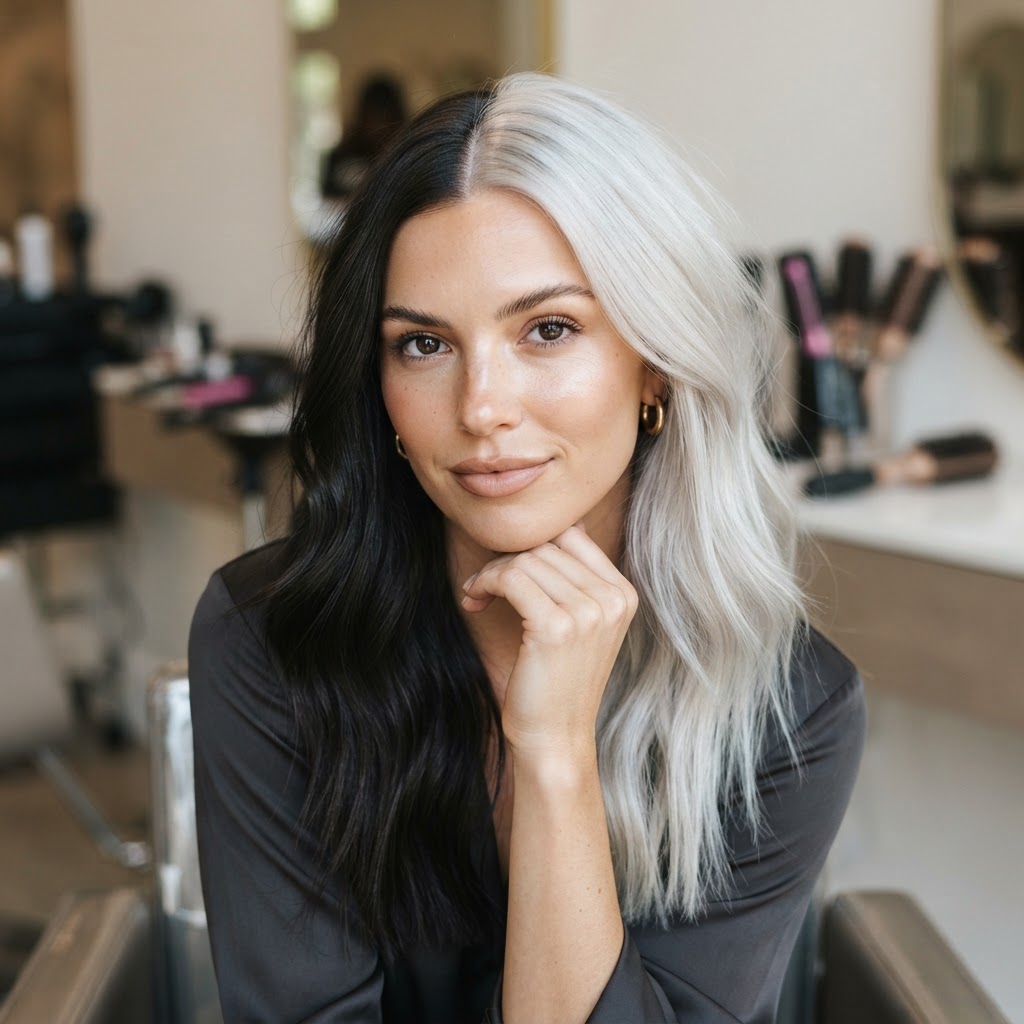
Bleaching dark hair to blonde: a step-by-step guide
hair bleaching, dark to blonde, hair care, DIY hair dye, bleach bath
Discover the ultimate step-by-step guide to bleaching dark hair to blonde at home. Learn expert tips on lightening, bleach baths, and safe aftercare.
Welcome to HairColourChart.online! If you are dreaming of a platinum transformation, finding a reliable resource for bleaching dark hair to blonde: a step-by-step guide is your crucial first step. Going from brunette to blonde is a major chemical journey, but with the right preparation, patience, and knowledge, you can achieve stunning, salon-worthy results at home.
Understanding the Lightening Process
Before you mix any chemicals, it is vital to understand how hair bleaching works. Bleaching involves using strong alkaline chemicals to open the hair cuticle and dissolve your hair's natural melanin (pigment).
If you are starting with dark hair (levels 1 to 4 on the hair colour chart), your hair contains a massive amount of underlying red and orange pigment. As the bleach lifts your natural colour, these warm tones are exposed. This is why dark hair often turns brassy, orange, or yellow during the lightening process before it ever reaches a pale blonde shade. According to experts, hair with existing blonde tones moves easily to platinum, whereas darker shades like dark brunette or black will likely appear yellow or warm reddish after the first application, as noted in the Guide to Bleaching | How to Bleach your Hair at Home.
What You'll Need for Hair Bleaching
Preparation is everything. Do not start the process until you have all the necessary tools and products laid out. Here is your essential toolkit:
- Bleach Powder and Developer: You will need a high-quality bleach powder and a cream developer. For dark hair, a 30-volume developer is usually the safest and most effective choice for home use. While a 40-volume developer offers maximum lift for very dark virgin hair, it is also the most damaging and should be used with extreme caution, as highlighted in How to Bleach Hair: The Complete Guide.
- Mixing Bowl and Tint Brush: Always use non-metallic plastic or glass bowls.
- Sectioning Clips: To divide your hair cleanly.
- Protective Gear: Latex or nitrile gloves, an old t-shirt, and a protective cape.
- Barrier Cream: Petroleum jelly or a thick body lotion to protect your hairline and ears.
- Toner: A violet or blue-based toner to neutralise brassy orange and yellow tones after bleaching.
- Deep Conditioner: To restore moisture post-treatment.
The Step-by-Step Guide: Dark to Blonde
Follow these steps meticulously to ensure an even, safe lift.
Step 1: The Strand and Patch Test
Never skip this step. Mix a tiny amount of bleach and developer. Apply it to a hidden strand of hair at the nape of your neck and leave it for 30-40 minutes. This tells you how your hair reacts, how much lift you can expect, and whether your hair is healthy enough to withstand the process. Simultaneously, dab a bit of the mixture behind your ear to check for allergic reactions.
Step 2: Prepare and Section
Apply your barrier cream around your hairline and ears. Divide your dry, unwashed hair into four neat quadrants (down the middle, and from ear to ear). Unwashed hair is preferred because your natural scalp oils act as a protective barrier against the harsh chemicals.
Step 3: Mix the Bleach
Put on your gloves. In your non-metallic bowl, mix the bleach powder and developer according to the manufacturer's instructions. The standard ratio is usually 1 part bleach powder to 2 parts developer. Mix until it forms a smooth, creamy consistency with no lumps, as advised in How To Bleach Hair Safely – A Step By Step Guide.
Step 4: Application
Start at the back quadrants, as the hair here is usually the darkest and thickest.
- Take thin, 1-inch subsections.
- Apply the bleach to the mid-lengths and ends first, staying about an inch away from your scalp. The heat from your scalp causes bleach to process much faster, which can lead to "hot roots" (roots that are significantly lighter than the rest of your hair).
- Once the mid-lengths and ends have lightened to a pale yellow/orange, go back and apply the bleach to your roots.
Step 5: Processing Time
Cover your hair with a plastic shower cap to keep the bleach moist; if bleach dries out, it stops working. Check your hair every 10 minutes by gently scraping a bit of bleach off a strand. Do not leave the bleach on for longer than 45 minutes. Leaving it on longer will not make it lighter; it will only cause severe breakage.
Step 6: Rinse and Wash
Once you have reached a pale yellow stage (or the maximum time has elapsed), rinse your hair thoroughly with lukewarm water. Shampoo gently with a sulphate-free shampoo to ensure all chemical residue is removed. Do not condition just yet if you are applying a toner immediately.
What is a Bleach Bath?
If your hair is too fragile for a full bleach application, or if you only need to lift your hair one or two shades (or remove leftover semi-permanent dye), a bleach bath is a fantastic alternative.
A bleach bath is a gentler, diluted lightening method. To create one, mix equal parts of bleach powder and developer (e.g., 25ml of each), and then add roughly double that amount of a clarifying shampoo to the mixture. Apply this to damp, towel-dried hair and massage it in like a regular shampoo. Keep a close eye on it, checking every 5 minutes, and rinse thoroughly once the desired lift is achieved, as detailed in How To Bleach Bath.
Aftercare and Toning
Freshly bleached hair is highly porous and vulnerable.
- Toning: Your hair will likely be a raw yellow or brassy orange. Apply a toner formulated for your specific level of lift. If your hair is orange, use a blue-based toner. If it is pale yellow, use a violet-based toner.
- Moisture and Bond Building: Bleaching strips the hair of its natural moisture and breaks structural bonds. Invest in a high-quality bond-repair treatment (like Olaplex or similar alternatives) and use deep conditioning masks weekly.
- Purple Shampoo: To maintain your new blonde and keep brassiness at bay, incorporate a purple shampoo into your routine once a week.
Common Mistakes to Avoid
- Overlapping Bleach: When touching up your roots in the future, never apply bleach to the previously lightened hair. This is a guaranteed recipe for snapping and breakage.
- Rushing the Process: Going from dark brunette to platinum blonde usually takes multiple sessions spaced several weeks apart. Do not try to achieve white hair in one day.
- Ignoring Hair Health: If your hair is already severely damaged, brittle, or breaking, do not bleach it. Focus on repairing the hair's integrity first.
FAQ
Can I bleach coloured hair?
Yes, but it is much more complicated than bleaching virgin hair. Artificial pigment is stubborn. If you have dyed your hair dark brown or black, you should use a colour remover before attempting to bleach it. Bleaching over dark box dye often results in patchy, bright orange hair.
How long should I wait between bleaching sessions?
If your hair needs a second round of bleach to reach your desired blonde, wait at least 3 to 4 weeks. During this resting period, treat your hair to intensive protein and moisture masks to rebuild its strength.
Why did my hair turn orange?
Dark hair contains strong underlying red and orange pigments. When you bleach it, the blue and brown pigments lift first, exposing the warm core. If you wash the bleach out too early, or if the developer wasn't strong enough, you will be left with an orange hue. You will either need to tone it with a blue-based toner or wait a few weeks and bleach it again to reach a pale yellow.